
SEMICONDUCTOR REVIEW THANK YOU FOR SUBSCRIBING
× 
Semi Conductor Review Weekly Brief
Be first to read the latest tech news, Industry Leader's Insights, and CIO interviews of medium and large enterprises exclusively from Semi Conductor Review
Semiconductor Review: Specials Magazine
For nearly two decades, VEINLAND GmbH has been a trusted supplier of certified, fault-tolerant interface systems that prevent failure in high-safety, mission-critical environments. The company designs and delivers advanced interface solutions that ensure reliable data integration and visualization across maritime, semiconductor manufacturing and industrial automation operations. Specialized in National Marine Electronics Association (NMEA) data handling, VEINLAND’s comprehensive portfolio of navigation interface solutions are designed and manufactured entirely in-house. Each solution is fully cyber-secure, IEC60945 certified and customizable to specific client requirements. While maritime applications remain its primary focus, the same interface engineering expertise extends to semiconductor and industrial automation environments, where signal reliability and data integrity are equally critical. “From the bridge of a ship to the engine control room, we bring high-reliability interface solutions that standard commercial off-the-shelf components often cannot match,” says Christoph Niendorf, sales director. VEINLAND’s emphasis on robustness, quality and reliability reflects its focus on preventing interface failure. Shipowners, system integrators, OEMs and industrial clients worldwide rely on the company to consolidate data from disparate systems and maintain high-integrity information that supports daily operational decisions.
Semiconductor Material Recycling Company Of The Year in Europe 2026
Why is recovering semiconductor materials becoming critical for supply resilience in Europe’s fabs Europe is looking inward to strengthen semiconductor manufacturing amidst the growing scarcity of critical materials. Semiconductor fabs are producing advanced chips at a record pace, yet nearly all the critical materials that enable that production—such as silicon, gallium, and indium—are imported, with no domestic base to fall back on. Reducing dependence on foreign supply and securing resilient material flows are now central to the region’s future. LuxChemtech directly enables this shift by recovering critical semiconductor materials from production waste and returning them to industrial use. Through element-level material recovery from manufacturing scrap, the company enables fabs to achieve material security using resources already available inside their production environments. As an operational company with established processes already in use, it delivers these capabilities at production scale, often before manufacturers even recognise recycling as a viable option. “Material recovery is no longer optional for this industry,” says Dr. Wolfram Palitzsch, Co-Founder & CEO. “If manufacturers want resilience, they have to start treating production waste as part of their material strategy, not as something that sits outside the core operation.” Strengthening Material Security within Semiconductor Production How can semiconductor fabrication scrap become a strategic source of critical materials Scrap generated during wafer fabrication, deposition and compound semiconductor processing often contains materials that remain valuable long after their initial use. In terms of material composition, silicon dominates the scrap stream by volume, while gallium- and indium-based compounds such as gallium arsenide and indium phosphide, for example, are present in smaller quantities. They are strategically important due to their role in high-performance applications and their limited supply base..
Capacitor

As global energy demand surges and next-generation applications, from AI data centers to electric vehicles, push the boundaries of existing grid technologies, including capacitor technology, the industry faces a critical need for new solutions and materials that deliver greater efficiency, reliability and thermal performance. Future Market Insights projects robust growth for the film capacitor market, driven by the need for advanced energy storage solutions that can withstand higher temperatures and deliver longer lifespans. Peak Nano’s breakthrough Peak NanoPlex® films directly address these challenges, offering the first U.S.- manufactured, nano-layered dielectric films that enable capacitor manufacturers to scale for the future and close critical supply chain gaps. ® delivers up to four times more energy storage, three to five times longer operational life, and reliable performance at temperatures far beyond the limits of conventional materials like biaxially oriented polypropylene (BOPP). With this technology, Peak Nano is enabling U.S. innovation and leadership in the capacitor industry, which is poised to power the next era of energy innovation. Experts in Developing Breakthrough Nanotechnology Systems Peak Nano specializes in developing next-generation capacitor film that guarantees more scalable, stable, smarter and adaptable power grids. The company produces highly ordered, nano-layered films at commercial scale by synergistically engineering proven polymers into innovative configurations using a proprietary nanolayer extrusion process. This unique approach allows Peak Nano to meet growing industry demand with unmatched versatility. “We’re the first U.S.-based materials development company bringing high-performance capacitor film to market that seamlessly retrofits into existing systems,” says Dr. Michael Ponting, chief scientific officer. “Our goal is to help meet energy demands and modernize the nation’s energy infrastructure, giving equipment manufacturers a way to future-proof their systems.” Its flagship technology—NanoPlex®—pushes the boundaries of what traditional capacitor films can achieve. The technology, developed in collaboration with Case Western Reserve University, the Defense Advanced Research Projects Agency (DARPA) and the Naval Research Laboratory, is a nano-scale metamaterial used for optics, capacitor films and specialty films. Peak Nano’s technological edge is led by an exceptional team of inventors from the original project, including Mason Wolak, the vice president of capacitor development. Its deep institutional knowledge, combined with a growing team of specialists in polymer science, capacitor engineering and advanced manufacturing, gives the company a competitive advantage. Leading the Way in Purpose-Built Innovation For over five decades, the capacitor industry has relied on a narrow set of materials, such as polypropylene or polyester, with new developments often taking more than a decade to reach market readiness. Peak Nano is turning this model on its head. By working with prominent capacitor manufacturers and end-users to identify industry needs, such as improved thermal performance without sacrificing the reliability of polypropylene in capacitors, Peak Nano has leveraged NanoPlex® technology to develop layered dielectric film (LDF) that offers low dissipation factor performance similar to BOPP, but with operational temperature ratings that are 25 to 35 degrees Celsius higher. Early evaluations of NanoPlex® LDF have been overwhelmingly positive. Most clients have advanced from qualification to prototype or scaling phases, demonstrating broad industry interest and validation.
PCB Design
Electronics is advancing at lightning speed. Engineers are expected to build smarter systems, deliver prototypes faster, and adapt to new technologies without increasing costs or complexity. Meeting these demands requires innovation, fair pricing, and responsive support. The right tools must be powerful, practical, and integrated to streamline design, simulation, and testing. This approach reduces development time and improves performance. One company that has built a strong reputation around these principles is Proteus, a leading provider of integrated electronic design automation tools. Its platform unifies schematic capture, PCB layout, simulation, and embedded co-design in a single environment. “Our goal has always been to reduce the gap between idea and implementation,” says Iain Cliffe, Executive Director. “We make that journey faster and more accessible for everyone—whether a solo developer, a global team, or an educator.” Innovation, Integration, and a Practical Approach Proteus earns long-term customer loyalty by empowering engineers to move faster without compromising on quality, cost, or support. That promise begins with continuous innovation. The platform regularly introduces new features that improve product performance, enhance simulation accuracy, and streamline design workflows—all aimed at solving real-world engineering challenges. Affordability is built into the platform’s core. Proteus delivers professional-grade tools with flexible pricing, making advanced capabilities accessible to individuals, educators, startups, and established teams. Its modular licensing model allows users to pay only for what they need and scale up as projects grow. Reliable technical support completes the experience. Engineers receive fast, expert assistance from professionals who understand the platform inside and out. Whether resolving issues or responding to feature requests, the company’s team serves as a trusted partner at every stage of development.

CXO INSIGHTS

Piezodynamic Force Measurement Improves Manufacturing of Semiconductors
Robert Hillinger, Industry Lead Semiconductor, Kistler Group

How IP brings technological innovation to life
Kristof Beets, Vice President of Product Management, Imagination Technologies

The Pendulum in Our Industry Again Strikes Maximum
Philipp Molendo, Vice President Purchasing Electronics, BSH Home Appliances Group

Next-Generation AI Hardware
Dr. Nikolai Ardey, Executive Director VW Group Innovation, Volkswagen AG

Illuminating the Path to a Software-Defined Future
Matthaeus Artmann, Project Manager Advanced Systems & Technologies,, ZKW

Industry 4.0: Reimagining Manufacturing Operations
Thierry Wipff, Global Manufacturing Technology Engineering Tires, Continental

The Polarisation of Electrification
Magnus Bredin, Manager System Engineering, Micropower Group


IN FOCUS

Mapping the Future: Europe's Transformative Approach to Vehicle Navigation Interfaces
European regulatory complexity, connectivity expectations, and brand differentiation are reshaping how navigation interface suppliers compete and collaborate with automakers.
Europe's Navigation Revolution: Trends and Innovations in Interface Technology
The European navigation interface market is growing due to demand across industries, innovation, and advancements in AI, user experience, and sustainability.
EDITORIAL
Engineering Resilience into Europe’s Semiconductor Future
Semiconductor innovation is increasingly defined by system-level reliability, energy efficiency and the ability to align hardware evolution with real-world deployment cycles. In this edition of Semiconductor Review Europe, we examine how interface engineering, power electronics and next-generation AI architectures are reshaping the continent’s semiconductor landscape.
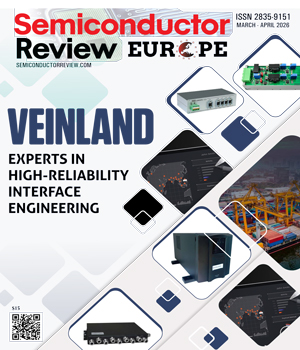
Our cover feature recognizes VEINLAND as the Top Navigation Interface Supplier in Europe 2026. For nearly two decades, VEINLAND has delivered certified, fault-tolerant interface systems engineered for mission-critical environments across maritime, semiconductor manufacturing and industrial automation. Its in-house development model, IEC 60945-certified and DNV-approved solutions, and cybersecure architectures underscore a disciplined focus on signal integrity and operational continuity. From advanced NMEA data handling to modular, open-architecture systems that enable filtering, recalculation and protocol normalization, VEINLAND has positioned itself as a long-term lifecycle partner rather than a component vendor.
Within this edition, Giacomo Fiocchi, Chief Innovation & Advanced Solutions Officer at Ariston Group, outlines the rapid expansion of heat pump adoption across Europe and the resulting demand for highly efficient power semiconductors, advanced MCUs and interoperable IoT architectures. The transition toward SiC and GaN devices, edge AI integration and higher-performance control electronics reflects a sector responding to both regulatory pressure and system complexity.
In parallel, Dr. Nikolai Ardey, Executive Director VW Group Innovation at Volkswagen AG, examines the synchronization challenge between software, hardware and production in AI-driven vehicles. He underscores the need for programmable dataflows, adaptive computing and closer automotive semiconductor collaboration to future-proof AI hardware.
Collectively, these perspectives point to a clear conclusion: Europe’s semiconductor progress will be defined by engineering rigor, cross-industry coordination and architectures designed for longevity. We invite readers to explore the insights in this edition and engage with the leaders shaping the next phase of semiconductor advancement.
This content is copyright protected
However, if you would like to share the information in this article, you may use the link below:
https://www.semiconductorreview.com/edition/march-april-2026-36.html