
Thank you for Subscribing to Semiconductor Review Weekly Brief
× 
Semi Conductor Review Weekly Brief
Be first to read the latest tech news, Industry Leader's Insights, and CIO interviews of medium and large enterprises exclusively from Semi Conductor Review
LuxChemtech has been recognized by Semiconductor Review Magazine as the exclusive recipient of “Semiconductor Material Recycling Company of the Year in Europe 2026,” based on our proprietary methodology, reflecting its position in the industry, and is also named among “Top Semiconductor Recycling in Europe,” reflecting its broader leadership. This profile has been developed by the Semiconductor Review research and editorial team based on insights from an interview with Dr. Ingo Röver, Co-Founder & CEO and Dr. Wolfram Palitzsch, Co-Founder & CEO.



LuxChemtech
Element-Level Recovery for Fab Resilience

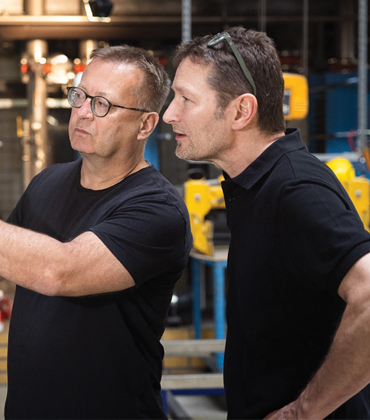 Dr. Ingo Röver, Co-Founder & CEO and Dr. Wolfram Palitzsch, Co-Founder & CEO
Europe is looking inward to strengthen semiconductor manufacturing amidst the growing scarcity of critical materials. Semiconductor fabs are producing advanced chips at a record pace, yet nearly all the critical materials that enable that production—such as silicon, gallium, and indium—are imported, with no domestic base to fall back on. Reducing dependence on foreign supply and securing resilient material flows are now central to the region’s future.
LuxChemtech directly enables this shift by recovering critical semiconductor materials from production waste and returning them to industrial use. Through element-level material recovery from manufacturing scrap, the company enables fabs to achieve material security using resources already available inside their production environments. As an operational company with established processes already in use, it delivers these capabilities at production scale, often before manufacturers even recognise recycling as a viable option.
“Material recovery is no longer optional for this industry,” says Dr. Wolfram Palitzsch, Co-Founder & CEO. “If manufacturers want resilience, they have to start treating production waste as part of their material strategy, not as something that sits outside the core operation.”
In addition to recycling, LuxChemtech also provides a range of specialized products and services for the semiconductor industry. These include the production of silicon components and alloys, materials processing such as etching and cleaning, analytical services for semiconductor materials, and the fabrication of specialty chemicals and nanoparticles used in advanced manufacturing environments.
Strengthening Material Security within Semiconductor Production
How can semiconductor fabrication scrap become a strategic source of critical materials
Scrap generated during wafer fabrication, deposition and compound semiconductor processing often contains materials that remain valuable long after their initial use.
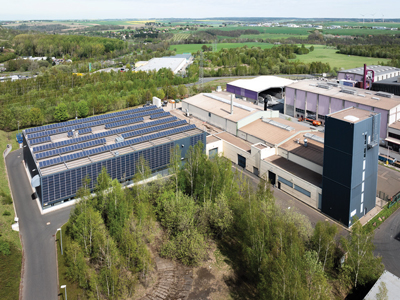 In terms of material composition, silicon dominates the scrap stream by volume, while gallium- and indium-based compounds such as gallium arsenide and indium phosphide, for example, are present in smaller quantities. They are strategically important due to their role in high-performance applications and their limited supply base.
LuxChemtech works directly with semiconductor manufacturers to take over these waste streams and recover usable materials. These materials can be reintroduced into controlled internal supply loops, allowing fabs to manage material availability with the same rigor as primary inputs. For European fabs, this approach offers a practical way to strengthen supply resilience without adding complexity to production environments.
Recovering Value from Complex Semiconductor Waste
What technologies allow recovery of individual elements from complex semiconductor manufacturing waste
LuxChemtech’s technical foundation comes from its early work in photovoltaic silicon recycling, recovering silicon across the PV production chain at an industrial scale. When PV manufacturing declined sharply in Europe after the pandemic and energy crisis, the company redirected that expertise toward semiconductor materials.
Semiconductor waste presents a fundamentally different challenge. Modern devices rely on advanced materials that often exist as alloys, mixed oxides or compound structures. These materials cannot be effectively recovered solely by mechanical processes. Once reduced to bulk scrap, much of their value is permanently lost.
LuxChemtech addresses this challenge through an integrated recycling model that combines physical and chemical technologies. Mechanical separation is applied to efficiently sort and preprocess materials. Chemical processes then operate at the molecular and atomic level, enabling the separation and recovery of individual elements from complex material matrices.
-
Material recovery is no longer optional for this industry. If manufacturers want resilience, they have to start treating production waste as part of their material strategy, not as something that sits outside the core operation.
LuxChemtech addresses this challenge through an integrated recycling model that combines physical and chemical technologies. Mechanical separation is applied to efficiently sort and preprocess materials. Chemical processes then operate at the molecular and atomic level, enabling the separation and recovery of individual elements from complex material matrices.
This type of recovery is crucial for elements such as indium, gallium, and others. Recovering such specific elements from semiconductor waste is becoming a core component of long-term materials strategies, transforming complex scrap into reliable sources of raw materials.
Enabling Circular Use without Disrupting Manufacturing Operations
How does LuxChemtech integrate recovered materials into semiconductor manufacturing without disrupting production
LuxChemtech’s operating model is designed to accommodate differences across semiconductor production environments. Processes, materials and purity thresholds differ depending on device type and application. Each engagement is structured based on the specific waste stream and the customer’s technical requirements.
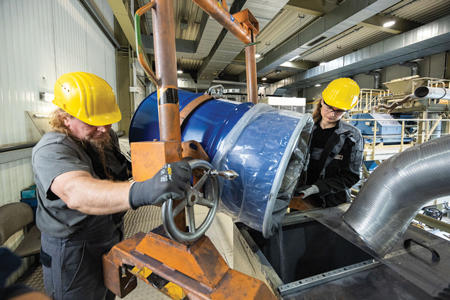 In some cases, recovered materials can be cleaned and prepared for direct reuse within production. Where purity levels no longer meet original specifications, LuxChemtech converts the material into new products that remain relevant to semiconductor operations.
Operational readiness plays a central role. With technologies already deployed, the company can respond quickly to new waste types as they emerge or to material constraints that intensify. For manufacturers operating under tight production timelines, this readiness is critical.
Beyond raw material recovery, LuxChemtech supports closed-loop manufacturing by producing components, such as sputtering targets, shields and carriers, from recovered materials - which now also applies to high-purity quartz. These components can be reintroduced into semiconductor fabs without requiring changes to existing equipment or workflows. Recently, the focus has also shifted to the environment of semiconductor users. Low-concentration precious metal-containing waste, for example, represents an exciting new field of work.
Scaling Recycling as Part of Semiconductor Infrastructure
LuxChemtech’s role extends beyond individual customer engagements. The company participates in national and EU-level initiatives (InGaGe, Resilient) to strengthen Europe’s semiconductor ecosystem through advanced recycling and material recovery. These collaborations reflect growing recognition that recycling capabilities are becoming part of core industrial infrastructure.
In recent months, LuxChemtech has expanded its involvement in semiconductor-focused projects. New collaborations are entering early execution phases, supporting scale, industrial validation, and ecosystem-wide knowledge transfer.
Its priorities remain execution-driven. LuxChemtech focuses on expanding its customer base, increasing throughput and growing its team in line with demand. At the same time, it continues to monitor which materials are becoming more constrained and valuable, using that insight to guide process development and strategic focus as customer needs and material risks evolve.
This execution-first focus aligns closely with the direction the semiconductor market is taking. Semiconductor recycling is no longer defined primarily by sustainability objectives. It is now closely tied to competitiveness, resilience and long-term operational control. Manufacturers that treat waste as a recoverable resource rather than a cost are better positioned to navigate uncertainty in global supply chains.
As semiconductor supply chains remain fragile, recovery will move from a reactive measure to a core production capability. Embedding material reuse directly into manufacturing flows, LuxChemtech supports a future where fabs gain greater control over inputs, costs and long-term operational stability.
Building Strategic Supply through Semiconductor Material Recycling
The semiconductor industry faces a structural tension between expanding chip demand and the fragile supply chains that support it. Advanced manufacturing depends on a narrow group of specialty materials, many of which originate from limited geographic sources. European chip producers, in particular, confront exposure to imported raw materials and the volatility that accompanies them. At the same time, semiconductor manufacturing generates a steady stream of process scrap, unused wafers and compound materials that historically moved toward disposal rather than recovery. As supply constraints and material dependencies become more visible, this waste stream is increasingly being reconsidered. What was once treated as a byproduct of fabrication is now emerging as a potential source of strategic materials within the industry.
Procurement leaders responsible for semiconductor material recycling services increasingly evaluate providers through the lens of supply resilience. Recovering valuable elements from production scrap requires technical capabilities that extend beyond traditional industrial recycling. Semiconductor materials include compounds such as gallium arsenide or phosphide structures where multiple elements are bound together in complex chemical forms. Simple size reduction or sorting methods rarely achieve meaningful recovery from such compositions. Effective recycling therefore depends on a coordinated combination of mechanical preparation and chemical separation techniques capable of isolating individual elements within mixed material structures.
Another important dimension lies in how recycling partners interact with fabrication environments. Semiconductor production lines operate under strict purity standards and process discipline. Waste generated during wafer fabrication or component manufacturing may vary significantly depending on the specific production step. Service providers must therefore demonstrate the ability to handle diverse scrap streams and adjust treatment methods according to material composition, contamination level and the end use of recovered elements. Recycling solutions that remain rigid or narrowly specialized often struggle to integrate into semiconductor supply chains where waste types change as manufacturing processes evolve.
Industry decision-makers also weigh the practical outcomes that recycling can deliver for manufacturing organizations. Recovered materials may return directly into the production ecosystem when purity levels permit reuse, while other streams require transformation into new industrial components that support semiconductor fabrication. A recycling partner capable of converting recovered elements into usable products such as deposition targets or protective components adds measurable value to the supply chain. This approach reduces reliance on imported materials while allowing manufacturers to extract continued utility from material that once represented cost or disposal risk.
Semiconductor manufacturers also increasingly view recycling capability as part of a broader strategy for managing material scarcity. Gallium, rare compounds and specialty semiconductor substrates remain heavily dependent on external mining or refining regions. Recycling processes that recover such elements from production scrap introduce a parallel supply channel that remains within the industrial ecosystem. The economic implications extend beyond environmental goals. Greater control over material circulation reduces exposure to geopolitical shifts, supply disruptions and price volatility that can affect fabrication costs.
LuxChemtech exemplifies the type of specialized provider emerging within this space. Founded in 2019, the company transitioned from photovoltaic recycling toward semiconductor material recovery as production patterns in Europe evolved. It focuses on reclaiming valuable elements from semiconductor manufacturing waste while combining mechanical treatment methods with chemical separation processes to recover materials that cannot be isolated through physical sorting alone.
This hybrid approach allows it to process complex semiconductor compounds and extract individual elements such as silicon, gallium and other semiconductor materials.
Flexibility forms a central element of the company’s service model. LuxChemtech adapts recycling pathways based on the specific waste stream provided by a client. Materials may be cleaned and prepared for reuse in semiconductor manufacturing when purity allows. Other streams are transformed into industrial components used within fabrication environments, including sputtering targets, carriers or shielding elements derived from recovered semiconductor materials.
This ability to convert production scrap into functional products while returning valuable elements to the supply chain positions LuxChemtech as a compelling choice for semiconductor manufacturers seeking disciplined material recovery solutions that strengthen supply stability.
...Read more
Semiconductor Material Recycling Companies in Europe Info
Q1
What Should Buyers Understand About Semiconductor Material Recycling Companies in Europe?
Semiconductor Material Recycling Companies in Europe are becoming part of material planning, not only waste handling. Fabs depend on scarce inputs such as silicon, gallium and indium, many of which come through exposed supply routes. Recycling production scrap gives manufacturers another route to usable material while reducing the cost and uncertainty tied to disposal. The decision is practical: waste that leaves the site without a recovery plan may also carry away material value.
Q2
How Does LuxChemtech Turn Fab Waste into Recoverable Materials?
Semiconductor scrap is rarely simple. LuxChemtech works with waste from wafer fabrication, deposition and compound semiconductor processing, then applies mechanical preparation followed by chemical separation at molecular and atomic levels. That combination helps recover individual elements from mixed structures, making Semiconductor Material Recycling Companies in Europe relevant to fabs that need more than sorting or bulk scrap resale. The work also covers silicon components and alloys, etching and cleaning, analytical services, specialty chemicals and nanoparticles for advanced manufacturing settings.
Q3
Why Do Element-Level Recovery Methods Matter?
A bad recovery method can destroy value before the material is even tested. Gallium arsenide, indium phosphide, oxides and alloys often need treatment that separates elements without reducing everything to low-value residue. Semiconductor Material Recycling Companies in Europe must understand composition, contamination and purity targets before deciding whether a stream can return to production or become another semiconductor-use product. This is especially important when valuable materials appear in small concentrations but still affect supply security.
Q4
What Makes Circular Material Use Practical for Fabs?
Circular use works only when recovered material fits existing production discipline. Semiconductor Material Recycling Companies in Europe need to respect purity thresholds, process differences and equipment compatibility. Some material can be cleaned for direct reuse. Other streams may be converted into sputtering targets, shields, carriers or high-purity quartz-related components that support fab environments without forcing major workflow changes. For production teams, the test is whether recycling supports material control without adding extra handling steps or unpredictable delays.
Q5
Where Does LuxChemtech Fit in Europe’s Recycling Infrastructure?
LuxChemtech was founded in 2019 and built early experience in photovoltaic silicon recycling before shifting that knowledge toward semiconductor material recovery. It participates in national and EU-level initiatives such as InGaGe and Resilient, while expanding customer work, throughput and team capacity. That makes Semiconductor Material Recycling Companies in Europe part of a wider effort to keep critical materials circulating inside the region’s industrial base. Its work also reflects a shift from sustainability messaging toward supply resilience, cost control and stronger control over scarce inputs.
Q6
How Should Manufacturers Evaluate a Recycling Partner?
Manufacturers should test a partner against real waste streams, not a broad sustainability claim. Ask how it handles mixed compounds, changing scrap composition, analytical review, purity limits and the route back into usable material. The strongest Semiconductor Material Recycling Companies in Europe can explain when reuse is realistic, when conversion into components makes more sense and how recovered material reduces exposure to supply volatility. A useful review should include actual scrap samples, expected recovery routes and clear documentation of what happens after processing.
| Share this Article:Tweet
|
Company
LuxChemtech
Management
Dr. Ingo Röver, Co-Founder & CEO and Dr. Wolfram Palitzsch, Co-Founder & CEO
Description
LuxChemtech enables European semiconductor fabricators to secure critical materials from their own processes. By recovering silicon, compound semiconductor elements, and other valuable materials from production waste, the company transforms unwanted waste into a reliable source of raw materials. This strengthens material resilience, reduces external dependencies, and supports closed-loop material cycles at production scale.
This content is copyright protected
However, if you would like to share the information in this article, you may use the link below: