
SEMICONDUCTOR REVIEW THANK YOU FOR SUBSCRIBING
× 
Semi Conductor Review Weekly Brief
Be first to read the latest tech news, Industry Leader's Insights, and CIO interviews of medium and large enterprises exclusively from Semi Conductor Review
Semiconductor Review: Specials Magazine
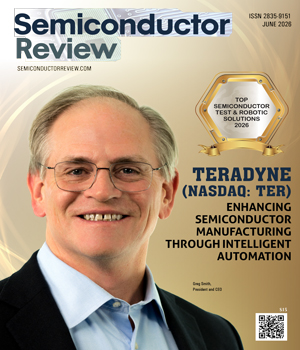
Semiconductor manufacturers are struggling to maintain throughput as advanced devices require longer validation cycles and tighter coordination between testing and factory movement. Teradyne (NASDAQ: TER) develops semiconductor test and intelligent robotics technologies that help manufacturers keep qualification flow moving efficiently without compromising validation accuracy. AI accelerators and advanced packaging have changed the pace of semiconductor manufacturing. Engineering teams now validate denser architectures under compressed schedules, forcing assembly lines to handle greater complexity without slowing qualification timelines. Semiconductor facilities cannot afford delays between testing stages because even minor interruptions can affect output and operational efficiency. "At Teradyne, our strategy is built on a simple but powerful premise: the AI revolution demands test and physical AI solutions that span the full journey from wafer to data center," says Greg Smith, president and CEO. Teradyne combines semiconductor test equipment with collaborative robotics and autonomous mobile robotics to help manufacturers manage these demands more efficiently. Its technologies support qualification stages that require precise validation and coordinated material movement to maintain operational speed. Semiconductor Test Systems Designed for Device Complexity Teradyne’s test portfolio covers wafer sort, final test and system-level validation for memory, analog, mixed-signal and system-on-chip applications. Its platforms allow engineering teams to shift between qualification programs without replacing large sections of test hardware, helping customers manage changing qualification requirements more efficiently. Demand for high-performance computing has also increased the volume of data generated during semiconductor validation. Processors designed for AI workloads require more advanced signal analysis under increasingly demanding electrical conditions. Teradyne continues expanding test capabilities that support these compute-intensive applications and evolving semiconductor architectures. Semiconductor companies also handle a broader mix of devices than in previous qualification cycles. Automotive electronics, industrial systems and consumer computing products all require different qualification methods. Engineering teams, therefore, need test infrastructure that adapts quickly without reducing throughput or disrupting qualification schedules. Engineering teams now rely heavily on diagnostic visibility during validation because semiconductor operations generate large volumes of operational data tied to yield behavior and failure analysis. Teradyne integrates analytics capabilities that help engineers isolate anomalies and identify process variations earlier during test execution. Intelligent Robotics Supporting Manufacturing Flow Teradyne’s robotics technologies support factory operations that can no longer depend on fixed automation designed for repetitive workflows. Semiconductor facilities now manage faster product transitions, higher movement frequency and greater variability between qualification stages. These conditions require automation systems that respond quickly without interrupting workflow timing. Through Universal Robots, Teradyne develops collaborative robotics systems that support inspection, machine tending and material handling inside semiconductor and electronics facilities. The systems operate alongside facility personnel and help reduce repetitive movement that slows engineering workflows or increases manual strain. Semiconductor manufacturers often need robotics systems that integrate into existing factory workflows without lengthy deployment cycles or extensive programming requirements. Teradyne supports faster implementation through robotics interfaces that simplify customization and reduce integration complexity. Its autonomous mobile robotics technologies, developed through Mobile Industrial Robots, help semiconductor manufacturers coordinate movement between qualification stages more efficiently. Semiconductor operations depend heavily on the timely transport of tooling, materials and qualified components. The company’s mobile robotics systems help reduce transport delays that can interrupt factory schedules. Teradyne continues strengthening robotics capabilities through AI-driven navigation and adaptive movement technologies. Robotics systems now respond more effectively to changing factory conditions through route optimization and real-time obstacle adjustment. These capabilities help manufacturers maintain workflow continuity inside high-volume semiconductor operations. The robotics portfolio supports a broader automation strategy focused on operational responsiveness and coordination. Collaborative robotics and autonomous mobility technologies help manufacturers manage material movement more efficiently without relying heavily on manual intervention.
AI-Driven Chip Design Automation Company of the Year 2026
What workflow inefficiencies are slowing semiconductor chip verification and development processes today? Chip development today is constrained less by physics and more by engineering workflow inefficiencies. Verification alone can take several months, driven by manual testbench creation, fragmented tools, prolonged debug cycles and misalignment across specification, RTL and test environments. MooresLabAI addresses this bottleneck with its AI-driven chip design platform. It restructures development workflows, replacing sequential, manual processes with a coordinated and automated system spanning specification to tapeout. “We are shifting the paradigm from manually building chips to autonomously generating them,” says Shelly Henry, CEO. Coordinated Execution across the Design Lifecycle How does coordinated AI execution improve alignment across semiconductor design and verification stages? Debugging failures across multiple files, iterating over bug fixes and maintaining alignment between specification and design add further delays to the chip development process. MooresLabAI connects each stage of development. It moves beyond incremental AI assistance by enabling coordinated execution across the design lifecycle, where specification, RTL and verification are managed together rather than as separate activities. Its agentic AI systems execute tasks across the full lifecycle, coordinating specification, RTL generation, verification, coverage and debug through structured interactions between specialized agents. Tasks are executed in parallel, with agents triggering simulations, analyzing failures and initiating fixes without requiring manual handoffs between stages. “The core innovation is that we didn’t build a copilot. Our platform understands relationships across the entire lifecycle,” says Henry. By integrating directly with electronic design automation (EDA) tools, MooresLabAI executes simulations, analyzes failures and iterates automatically within a closed feedback loop that continuously refines outputs. This ensures outputs from one stage directly inform the next, reducing delays and maintaining consistency across the workflow. Closing the Loop on Verification Why is closed-loop verification becoming important within modern semiconductor engineering and testing workflows? Traditional verification flows remain fragmented across multiple tools and environments, involving UVM testbench development, testcase implementation and regression execution. Engineers spend significant time debugging failures across files, identifying root causes and revalidating through repeated iterations, extending timelines and limiting efficiency. MooresLabAI’s VerifAgent restructures this cycle into a closed-loop system. It begins by ingesting specification and RTL inputs to automatically generate complete verification environments, including test plans, UVM testbenches, coverage models and assertions. Simulations are executed using integrated tools, while failures trigger automated root-cause analysis across files and apply corrective actions. The system continuously revalidates outputs after each fix, maintaining an active loop of generation, correction and verification.

Top High Voltage Pulse Modulators 2026

High-power radars and similar systems are expected to operate for decades, yet many rely on architectures that must continue to perform reliably as components become harder to source. Maintaining consistent performance over long periods is becoming increasingly challenging, particularly when systems must adapt to evolving operational needs without a complete replacement. In this environment, reliability, supportability, and long-term viability carry as much weight as performance. Diversified Technologies, Inc. (DTI) operates in this space, focusing on the design and construction of high-voltage, high-power electronic systems for defense, radar, scientific research, and industrial applications. “Our work is built on a solid-state switching architecture that enables precise control of high voltage and high power over long operating periods,” says Michael Kempkes, VP of marketing. “That same architecture gives us the flexibility to support a wide range of applications while maintaining reliability.” The company’s foundation lies in the development of a patented solid-state switching technology. By combining low-voltage semiconductors in series and parallel, DTI has enabled multiple transistors to operate as a single switch, capable of handling high voltage and power. Today, nearly 90 percent of its work is built on this innovation, which continues to drive system performance across diverse applications. Initially used in high-energy physics and semiconductor environments that require precise pulse control, the technology has transitioned to radar systems, which are currently its largest market. This architecture supports a wide range of operational requirements. Systems can be configured from a few kilovolts to 500 kilovolts and from low current levels to tens of kiloamps, allowing the company to support a wide range of vacuum tube applications, including traveling wave tubes, klystrons, and magnetrons. Such flexibility allows the same underlying technology to be configured for different requirements without relying on completely new system designs. Many of these systems remain operational for decades, demonstrating the design's durability.
CXO INSIGHTS

Trends to Watch in the 3D Era
Aaron Fellis, Corporate Vice President and General Manager of Dielectric ALD Products, Lam Research [NASDAQ: LRCX]

Mission Readiness: Achieving Excellence through Technology Innovation
Norm Balchunas, Senior Director, Honeywell

Recycling, Resilience and Regional Strategy: The Three Rs of Automotive Procurement
Gergely Baranyi, Purchasing Director of Raw Materials and Passive Safety Technologies, Nissan Motor Corporation [TYO: 7201]

Cohesive Culture Key to Manufacturing Under Duress
Derek McKenney, Vice President, Manufacturing Operations, Puritan Medical Products

Prefabrication, Modelling, and the Modular Future of Electrical and Intelligent Transportation Systems in Construction
Daniel Cole, PMP, Senior Project Manager, Aldridge Electric, Inc

Achieving Industrial Excellence: Enhancing Manufacturing through a Hybrid New Product Introduction process
Tats De, PhD, Senior Director of Engineering, Daikin Industries

How High Speed Connectivity is Enabling IoT
Michael Tryson, CTO & Vice President of Engineering, TE Connectivity


IN FOCUS
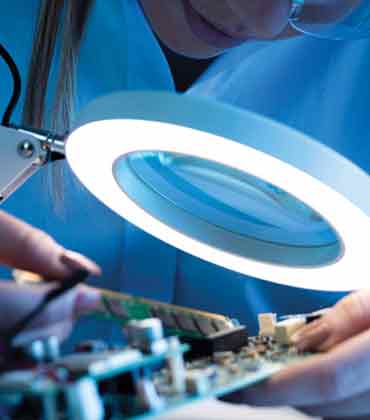
Semiconductor Manufacturing: Trends Driving Innovation and Sustainability
Semiconductor manufacturing major trends include advanced process technologies, sustainability initiatives, automation, and smart manufacturing.
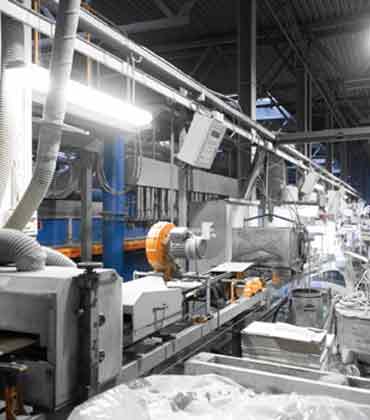
Elevating Manufacturing Standards with Advanced Quartzware Fabrication
Quartzware fabrication systems enhance production efficiency, ensure material purity, improve process reliability and enable high-performance outcomes in advanced manufacturing environments.
EDITORIAL
Execution in Semiconductor Manufacturing
Semiconductor manufacturing is entering a phase where operational reliability, process discipline and infrastructure resilience are becoming decisive competitive factors. This edition of Semiconductor Review examines how organizations across the semiconductor ecosystem are responding to tighter tolerances, increasing system complexity and rising expectations around quality, cybersecurity and production continuity.
MooresLabAI, recognized as the AI-Driven Chip Design Automation Company of the Year 2026. The company is redefining semiconductor development through an AI-driven platform that connects specification, RTL generation, verification and debug into a coordinated workflow. By replacing fragmented, manual processes with agentic AI systems that execute tasks across the design lifecycle, MooresLabAI significantly reduces verification timelines, improves engineering productivity and enables faster tape-outs.
Also featured in this edition is Diversified Technologies, Inc. named as the Top High Voltage Pulse Modulators 2026. The company has built its reputation on a patented solid-state switching architecture that enables precise control of high voltage and high power across demanding applications. Serving defense, radar, scientific research and industrial markets, Diversified Technologies delivers integrated systems designed for reliability, flexibility and long-term operational performance.
This edition also features insights from Aaron Fellis, Vice President General Manager at Lam Research. He highlights how advanced analytics, machine learning and virtual sensor technologies are transforming operational performance in highly complex environments.
Norm Balchunas, Senior Director at Honeywell examines how predictive analytics, connected maintenance and situational awareness technologies are improving mission readiness and operational precision. His insights highlight the increasing role of real time data and modernization strategies in strengthening reliability across mission-critical systems.
The companies and leaders featured in this edition reflect an industry increasingly defined by disciplined execution, technical accountability and continuous improvement. We encourage readers to explore the perspectives presented throughout this issue as semiconductor and advanced manufacturing sectors continue to evolve toward higher standards of reliability and performance.
This content is copyright protected
However, if you would like to share the information in this article, you may use the link below:
https://www.semiconductorreview.com/edition/june-2026-40.html