
SEMICONDUCTOR REVIEW THANK YOU FOR SUBSCRIBING
× 
Semi Conductor Review Weekly Brief
Be first to read the latest tech news, Industry Leader's Insights, and CIO interviews of medium and large enterprises exclusively from Semi Conductor Review
Semiconductor Review: Specials Magazine
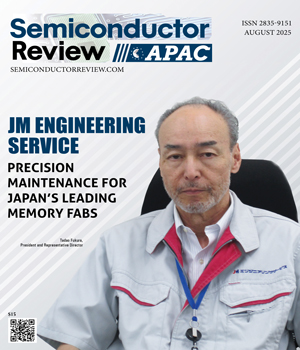
JM Engineering Service (JMES) supports the most advanced memory manufacturers in Japan—Micron Memory Japan, Kioxia and TSMC—by maintaining the equipment and cleanroom conditions that keep semiconductor production stable and uninterrupted. Founded in 2014 and established with engineers who spent their careers inside semiconductor fabs, JMES understands what it takes to hold the line in high-stakes manufacturing environments. The company’s core strength lies in its ability to perform precision maintenance and real-time environment management, ensuring that every tool operates within narrow tolerances and every cleanroom stays within controlled parameters. “Maintenance may be invisible in fabs, but it keeps systems running without interruption. These environments leave no room for error. Reliability depends on precision, consistency and people who know how to keep everything in motion,” says Tadao Fukura, president and representative director. JMES draws on a workforce shaped by experience. Since its establishment, seasoned engineers with decades of experience at device manufacturers have nurtured the next generation of engineers and expanded its business. This layered experience allows JMES to move beyond routine support. The team often works directly with clients to refine protocols, troubleshoot chronic inefficiencies and adapt systems for smoother operation. JMES’s goal is to support customers in building these. Extending Tool Life Without Slowing Production Core equipment like dry etching and metal deposition systems form the backbone of chip fabrication. The semiconductor generations change rapidly and semiconductor microfabrication must also constantly evolve.
RF and Microwave Components
Sustained business success hinges on the ability to innovate, as it fosters adaptability and resilience in a competitive landscape. This contemporary adage is particularly relevant to the electronics and semiconductor industry, where generational leaps in technology occur daily. Staying ahead of such a rapidly evolving sector for decades reflects a company’s innovative spirit and commitment to longevity—and Narda-MITEQ has done this for over 70 years. The company's tenure in the dynamic radio frequency (RF) and microwave technology space is marked by a forward-looking ethos and a constant drive for innovation. Throughout this period, it has played a crucial role in providing the building blocks for wireless and communication advancements by providing precise, reliable performance in some of the most complex technological environments. “Our mission is to meet clients' current challenges while anticipating and meeting their technology requirements for the future," says Craig Lindberg, vice president of strategy & development. Powering Today’s Needs Narda-MITEQ’s product portfolio comprises a wide gamut of active/passive components and subsystems, including amplifiers, mixers, oscillators/synthesizers, couplers, power dividers, fiber optics, pin diode control products and SATCOM solutions. The company also specializes in creating tailored solutions by enhancing existing products from its catalog or designing entirely new systems from scratch. Its solutions include single-function components and complex multi-function assemblies known as integrated microwave assemblies (IMA), which perform multiple functions in a single module. All products are designed to operate in even the most rugged and extreme environments demanded by military and satellite applications. NardaMITEQ's V-Band and Ka-Band frequency converters, powering the ground connectivity system for Jupiter 3, the largest GEO satellite in the world, are a great example of its reliability in mission-critical applications. In addition to creating world-class products, the company also takes a proactive approach to ensuring efficient delivery. Its recent partnership with RFMW, a global distributor of RF/Microwave components, ensures adequate buffer stocks and provides on-demand access for customers.

Wafer Handling Solution
Miraial
Advanced Wafer Handling for High-Tech Semiconductor Manufacturing
Masatoshi Hyobu, President
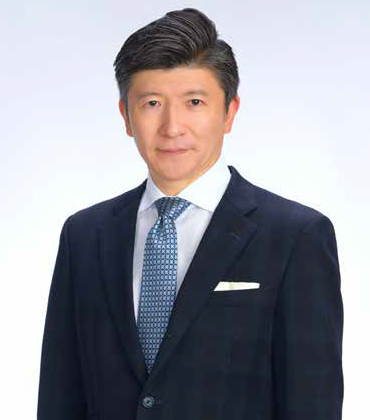
Miraial empowers semiconductor manufacturers with state-of-the-art wafer-handling solutions for contamination-free transport and secure storage of silicon wafers. With the industry’s rapid shift toward automation, high-quality and high-volume manufacturing, semiconductor fabs require handling solutions that align with evolving manufacturing processes. Miraial works directly with device makers to understand their requirements and develop precision-engineered wafer-handling systems. Its front-opening unified pods (FOUP), front-opening shipping boxes (FOSB) and wafer cassettes protect wafers from contamination and mechanical stress throughout their handling process. Tailoring these products to specific wafer sizes, thicknesses, and material compositions enhances production reliability and contamination control. These precisely engineered solutions integrate seamlessly into next-generation fabrication processes and enable fabs to maintain the most rigorous cleanliness and quality control standards. “As a customer-centric company, we highly value customer feedback, which is integral to our product development and quality improvement,” says Takamasa Kato, executive director. The rising demand for advanced, high-performance chips pushes semiconductor companies to refine their material handling processes, requiring more sophisticated solutions. Governments and industry leaders worldwide are strengthening domestic semiconductor capabilities. As companies restructure supply chains to meet evolving demands, Miraial’s customer base is shifting, driving demand for innovative handling solutions. To navigate this changing landscape, Miraial continuously tracks technological advancements, customer requirements and geopolitical shifts. It refines its strategy by analyzing the market, emerging manufacturing hubs and evolving material handling needs. At the heart of Miraial’s success lies an uncompromising commitment to Japanese quality, a standard that reflects meticulous engineering, stringent quality control and an obsession with purity. It partners with top global chemical firms to source high-performance plastics with ultra-low particle levels and minimal ion contamination. Setting it apart is its in-house development of molding machines, a rare capability that allows for complete control over quality and performance. “We continuously refine our strategies and set clear goals to stay competitive in this fast-evolving industry,” says Rakhmatullo Mamatov, global sales & marketing specialist.
CXO INSIGHTS

Unlocking the true value of Data - Lessons from the journey
Adarsha Marpalli, Sr Director- Global Head Data and Insights, Nexperia
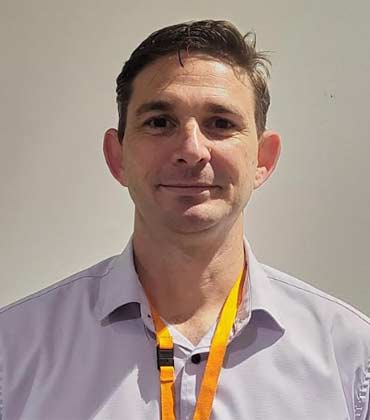
The Evolution of Insulated Gate Bipolar Transistors
Michele (Mike) Giulianini, Engineering Manager, Origin Energy

Scaling New Heights With AI in Silicon Wafer Manufacturing
J -Wing Teh, Director of Silicon & Systems Design Engineering, AMD [NASDAQ: AMD]

Long-Standing Lean Thinking
Stewart Johnstone, Vice President Asia, Adient
Building Tomorrow: The Role of Technology, Collaboration, and Innovation
James JIAN, Head of Transportation, Package & Warehouse Management, Continental
IN FOCUS
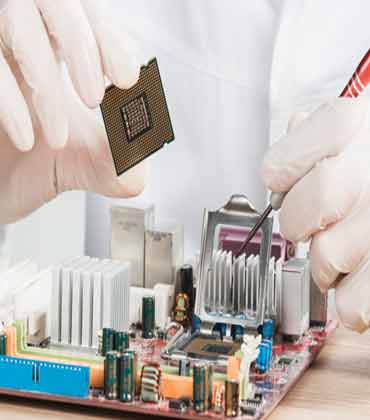
Digital Test Solutions Strengthen APAC Semiconductor Ecosystem
APAC’s semiconductor sector is rapidly transforming, fueled by advanced packaging, AI, and 5G. Evolving chip designs demand smarter, system-level testing and automation to ensure performance, efficiency, and reliability.
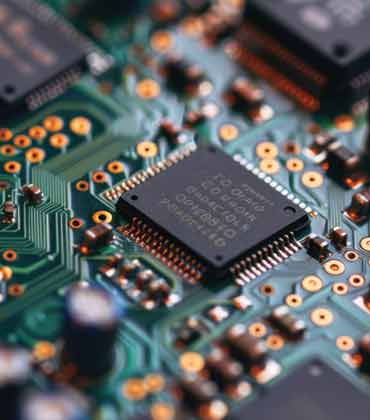
Enhancing Precision: The Evolution of Semiconductor Equipment in APAC
The semiconductor manufacturing equipment industry is evolving due to the growing demand for advanced, miniaturized chips, which face high costs and supply chain disruptions.
EDITORIAL
The Equipment Ecosystem Powering Semiconductor Leadership
The APAC region plays a central role in the global semiconductor landscape, home to industry powerhouses like Taiwan, Japan, South Korea, and emerging players in Southeast Asia. As the demand for high-performance chips surges across sectors, APAC fabs are racing to meet aggressive production goals. At the heart of this effort lies a complex array of semiconductor manufacturing equipment that enables the production of increasingly dense, powerful, and miniaturized chips.
This equipment—ranging from advanced lithography and etching machines to deposition systems and wafer inspection tools—is the engine room of every semiconductor fab. The more advanced the chip, the more precise and reliable the equipment must be. But performance isn’t just about the machinery itself. Cleanroom environments, vibration control, and real-time process monitoring systems are equally crucial to keeping defects low and yields high. In APAC’s leading-edge fabs, where the smallest disruption can mean millions in losses, equipment uptime and environmental stability are non-negotiable.
To maintain this delicate balance, fabs increasingly rely on specialized service providers who understand both the equipment and the manufacturing environment in which it operates. These partners don’t just repair tools—they prevent failures, optimize performance, and ensure compliance with exacting standards. In high-stakes, high-volume operations, their expertise often makes the difference between steady output and costly downtime. As fabs scale to meet global demand, the role of these equipment support specialists is becoming more strategic than ever.
This edition of Semiconductor Review APAC explores the critical intersection of precision equipment maintenance and advanced semiconductor manufacturing, highlighting the behind-the-scenes expertise that keeps the region’s most sophisticated fabs running at peak performance.
It features JM Engineering Service (JMES), a specialist engineering services company that supports the most advanced memory manufacturers in Japan by maintaining the equipment and cleanroom conditions to keep semiconductor production stable and uninterrupted. Established by engineers who spent their careers inside semiconductor fabs, JMES’ strength lies in its ability to ensure that every tool operates within narrow tolerances and every cleanroom stays within controlled parameters.
We hope this edition offers valuable insight into the often-unseen forces that uphold the semiconductor industry’s most critical operations. As APAC continues to lead the global charge in chip innovation and production, companies like JMES remind us that world-class manufacturing relies on cutting-edge technology, precision, dedication and expertise of those who keep every system running flawlessly behind the scenes.
This content is copyright protected
However, if you would like to share the information in this article, you may use the link below:
https://www.semiconductorreview.com/edition/august-2025-20.html