
Thank you for Subscribing to Semiconductor Review Weekly Brief
× 
Semi Conductor Review Weekly Brief
Be first to read the latest tech news, Industry Leader's Insights, and CIO interviews of medium and large enterprises exclusively from Semi Conductor Review
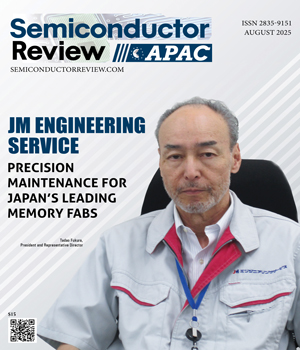
JM Engineering Service has been recognized by Semiconductor Review Magazine as “Top Semiconductor Manufacturing Equipment in APAC 2025” based on our proprietary methodology, reflecting its position in the industry. This profile has been developed by the Semiconductor Review research and editorial team based on insights from an interview with Tadao Fukura, President and Representative Director.



JM Engineering Service
Precision Maintenance for Japan’s Leading Memory Fabs

 Tadao Fukura, President and Representative Director
Founded in 2014 and established with engineers who spent their careers inside semiconductor fabs, JMES understands what it takes to hold the line in high-stakes manufacturing environments. The company’s core strength lies in its ability to perform precision maintenance and real-time environment management, ensuring that every tool operates within narrow tolerances and every cleanroom stays within controlled parameters.
“Maintenance may be invisible in fabs, but it keeps systems running without interruption. These environments leave no room for error. Reliability depends on precision, consistency and people who know how to keep everything in motion,” says Tadao Fukura, president and representative director.
JMES draws on a workforce shaped by experience. Since its establishment, seasoned engineers with decades of experience at device manufacturers have nurtured the next generation of engineers and expanded its business.
This layered experience allows JMES to move beyond routine support. The team often works directly with clients to refine protocols, troubleshoot chronic inefficiencies and adapt systems for smoother operation. JMES’s goal is to support customers in building these.
Extending Tool Life Without Slowing Production
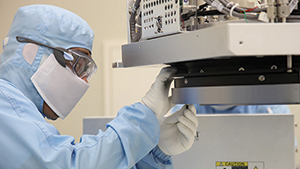 Core equipment like dry etching and metal deposition systems form the backbone of chip fabrication. The semiconductor generations change rapidly and semiconductor microfabrication must also constantly evolve.
To achieve this, manufacturers purchase new equipment or upgrade to higher-end models. Considering cost and pay performance, upgrading to higher-end models is often the way to go. JMES provides manufacturers with good pay performance by performing these upgrades.
It offers two interdependent services—maintenance for ongoing reliability and upgrades to support evolving process demands.
Routine maintenance focuses on dry etching systems used in fine patterning—an essential process for manufacturing advanced memory chips. Tasks include chamber cleaning, part replacement and inspections carried out in cleanrooms with strict process controls. These preventive efforts eliminate failures before they occur, minimizing disruptions and protecting line performance. All services are delivered on a contract basis, tailored to each fab's production needs and schedules.
-
Maintenance may be invisible in fabs, but it keeps systems running without interruption. These environments leave no room for error. Reliability depends on precision, consistency and people who know how to keep everything in motion
For upgrades, JMES offers an end-to-end solution. As a certified partner for Lam Research, it handles the entire cycle, including shutdown, utility disconnect, transport, upgrades at its facility, testing and on-site reinstallation. This applies to dry etching, multilayer deposition and metal processing systems. Each upgrade combines cleaning, replacement and alignment to meet new specifications. JMES coordinates with specialized transport companies to help clients scale without overextending internal teams.
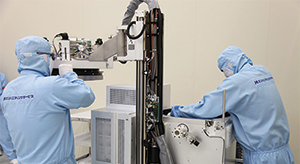 Thanks to this structured, integrated approach, JMES consistently delivers a 93 percent first-time pass rate, minimizing reworks, enabling faster restarts and strengthening equipment utilization.
Team leaders maintain strategic coordination through executive-level dialogue, while on-site engineers work directly with fab teams daily. Whether responding to a schedule shift, utility issue or urgent equipment repair, JMES moves quickly, resolving problems before they interrupt production.
All work is held to precise safety and quality standards. Multiple QC personnel conduct daily patrols of the work site, ensuring compliance with fab procedures and cleanroom requirements. JMES gets the job done first so clients can confidently return to full operations.
Engineers in Place Before the Line Goes Live
When semiconductor manufacturers ramp production or launch new facilities, staffing gaps can lead to costly delays. JMES addresses this by supplying temporary engineering personnel to support factory expansions, greenfield builds and equipment ramp-ups.
To meet demand, JMES takes a collaborative approach—mobilizing its internal workforce and working closely with JM Group affiliates like Towa-Shoko and PEK to support shared customers through a trusted partner network. This flexible model supports needs ranging from startup checks and inventory control to ongoing facilities management.
Each JMES engineer undergoes a six-month training program led by seasoned fab veterans. This includes Japanese seminars for foreign engineers; standard training without language seminars is about three months. Training begins at JMES’s technical center with classroom sessions, translated materials and videos created by JMES for foreign engineers, followed by supervised rotations in live production environments and advanced reinforcement training.
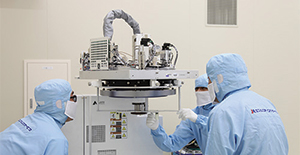 Engineers must pass SEAJ-aligned safety exams covering gas handling, robotics, cabinet operation and fab-specific hazards. In-house training also ensures job readiness, but this training is not included.
JMES’s international team includes members from China, Vietnam, Taiwan and Indonesia. Multilingual instruction ensures consistent quality and it teaches semiconductor manufacturing processes to Japan Material’s engineering department, which manufactures the gas cabinet.
Once deployed, engineers receive daily oversight from quality and safety officers. Real-time feedback and retraining ensure performance and safety. This closed-loop system has enabled JMES to boost customer uptime and yield.
Experience Sees What Specs Don’t
JMES proves its value when something feels off, even if everything appears fine. During an early maintenance check, engineers flagged a grounding unit that looked correct but raised concerns based on past discharge incidents. Their instincts were right: the unit had been misassembled during setup and JMES caught it just in time to prevent damage.
As chipmaking grows more complex, JMES is helping shape its future with smarter maintenance, faster recovery and engineers ready from day one. The industry will still need steady hands and JMES plans to be there at every step.
| Share this Article:Tweet
|
Company
JM Engineering Service
Management
Tadao Fukura, President and Representative Director
Description
JM Engineering Services specializes in embedded engineering support for semiconductor fabs, delivering high-quality tool upgrades, maintenance and process solutions. Backed by decades of frontline experience, the team ensures stable yield, extended tool life and zero-disruption execution.
This content is copyright protected
However, if you would like to share the information in this article, you may use the link below: