


Thank you for Subscribing to Semiconductor Review Weekly Brief
× 
Semi Conductor Review Weekly Brief
Be first to read the latest tech news, Industry Leader's Insights, and CIO interviews of medium and large enterprises exclusively from Semi Conductor Review
WDI Wise Device Inc. has been recognized by Semiconductor Review Magazine as “OEM Microscopy Automation Solutions of the Year in Canada 2025” based on our proprietary methodology, reflecting its position in the industry. This profile has been developed by the Semiconductor Review research and editorial team based on insights from an interview with Halszka Weiss, President, Dorothy Weiss Owner, Sr. Administrator, Marcelina Weiss, (Special Projects).


 Halszka Weiss, President, Dorothy Weiss Owner, Sr. Administrator, Marcelina Weiss, (Special Projects)
The company delivers cutting-edge OEM microscopy automation systems that power inspection, metrology, and imaging tools across the world. Although it has become a household name today by transforming automation itself from a component-level innovation into a collaborative engineering discipline, the story of WDI began more than two decades ago.
The founder, Dr. Adam Weiss PhD, started by building end-user inspection equipment for the glass industry. What began as a tightly focused enterprise soon grew into something far more consequential. Adam’s deep understanding of optics, mechanics, and industrial process control became the foundation for a new vision: to build the automation systems that would power the inspection and imaging tools of the future. From those roots, the company evolved into a trusted OEM partner for some of the world’s most sophisticated manufacturers.
Today under the leadership of current president and daughter Halszka, Weiss WDI’s technology underpins critical inspection platforms across industries that demand the highest levels of precision, from semiconductor wafer metrology to flat-panel display production and biomedical diagnostics. In an industry where precision and speed define competitiveness, WDI’s model of partnership-driven innovation has quietly reshaped how semiconductor, flat-panel display, and biomedical imaging technologies evolve. WDI has become the industry standard for autofocus technology and microscope automation.
“Our success isn’t merely the product of technical excellence,” says Halszka Weiss, president. “It’s the result of a philosophy that blends engineering rigor with an unusual degree of empathy. At WDI, innovation begins not with invention but with listening.”
A Culture of Collaboration
In most industrial partnerships, the word “customer” implies a transaction. At WDI, it implies collaboration! The company has long referred to those it serves as partners, not clients, because every project demands the kind of cooperation that transcends a simple vendor relationship.
Our team thinks on its feet, responds quickly, and builds well-thought-out solutions that deliver real results.
This collaborative model took shape over years of shared problem-solving. As inspection challenges became more complex, whether in wafer geometry, coating irregularities, or the pace of next-generation substrate development, WDI’s engineers began working side by side with their counterparts at partner organizations. The goal was never just to deliver a component; it was to engineer a solution that aligned precisely with the realities of high-volume manufacturing.
One example stands out. A tool manufacturer in the semiconductor sector approached WDI with an ambitious requirement: a microscopy module that could support both bright-field and dark-field imaging, switch modes in milliseconds, and fit within the tight spatial constraints of a next-generation inspection system. WDI’s mechanical and optical teams collaborated directly with the partner’s engineers, designing a compact, high-speed modular solution that became the foundation of the tool itself. It wasn’t a matter of off-the-shelf supply; it was an act of engineering symbiosis.
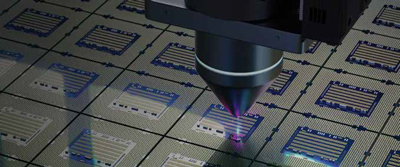 That same spirit defines how WDI approaches even its most advanced autofocus technologies. When one of its partners needed a wafer inspection system capable of operating at unprecedented speeds, WDI didn’t simply deliver hardware. It developed algorithms that had never existed before, integrating custom software and image processing frameworks that became proprietary to that specific toolmaker.
“Partnership is in our DNA,” says Tedd Kelemen, vice president of sales and marketing. “We don’t just hand someone a product and a software kit. We work with them on live wafers or real samples to fine-tune performance for their unique application. That’s what makes our relationships so powerful. We build solutions together.”
Reinventing the Core
For a company steeped in tradition, WDI has never hesitated to reinvent itself when innovation demands it. In 2017, the engineering team faced a defining moment.
The company’s renowned laser autofocus platform, a cornerstone of its product line for years, had reached the physical limits of its core components. Processing power, memory speed, and sensor performance had plateaued. Rather than iterating on an aging design, WDI made a bold decision to rebuild everything from the ground up.
The project that followed was more than an upgrade; it was a reimagining of what autofocus technology could be. By integrating next-generation processors, high-speed memory, and new laser and camera architectures, WDI created an entirely new platform that redefined speed, precision, and modularity. The PFA line, introduced in 2019 with the launch of the PFA laser autofocus sensor, marked the beginning of this transformation. The PFA-DT followed in 2023, and by early 2025, the company unveiled its most advanced version yet, the PFA-LN laser autofocus sensor.
Each iteration reflected not only improvements in hardware but also a deepening understanding of industry demands. Semiconductor manufacturers, for instance, require technologies that remain stable across six- or seven-year production lifecycles. The PFA-LN was built with that in mind: a future-proof platform designed to deliver consistency in an environment where the smallest deviation can translate into millions in yield impact.
The payoff was immediate. With greater processing power and flexible modular integration, the new system could handle previously unattainable wafer types, exotic coatings, and faster movement speeds. The redesign became the foundation for WDI’s next phase of growth.
-
Our success isn’t merely the product of technical excellence. It’s the result of a philosophy that blends engineering rigor with an unusual degree of empathy. At WDI, innovation begins not with invention but with listening.
The payoff was immediate. With greater processing power and flexible modular integration, the new system could handle previously unattainable wafer types, exotic coatings, and faster movement speeds. The redesign became the foundation for WDI’s next phase of growth.
Engineering at the Core
Inside WDI’s headquarters, the atmosphere feels less like a corporate office and more like an engineering lab. The company employs a tightly knit team of mechanical, electrical, optical, and software engineers, alongside PhD-level optical scientists and an applications group that bridges theory and practice.
This structure isn’t accidental. WDI has always identified as an engineering company first, a manufacturing company second, and a sales organization third. Every product originates from a conversation—a problem presented by a partner, a new inspection challenge, or a request for greater precision at higher throughput. From that starting point, cross-disciplinary teams assemble to experiment, simulate, and prototype until the perfect balance of optical clarity and mechanical precision is achieved.
Over time, this approach has produced what Kelemen calls WDI’s “box of microscopy automation Lego.” After twenty years, the company has amassed a vast library of optical and mechanical components, each tested, refined, and proven in the field. When a new integration challenge arises, engineers can combine existing modules in novel ways or design new pieces from scratch. This modularity allows WDI to respond quickly, creating custom solutions in months rather than years.
That agility has become a competitive advantage. Larger organizations, burdened by layers of bureaucracy, often take years to adapt to new inspection requirements. WDI can do it in a fraction of the time.
“We grew from a small basement operation into what we are now,” reflects Weiss. “But we’ve kept that small-business mentality. Our team thinks on its feet, responds quickly, and builds well-thought-out solutions that deliver real results.”
Learning through Partnership
If there’s a single thread running through WDI’s history, it’s a relentless commitment to learning. The company’s engineers and applications specialists work in constant dialogue with partners, often visiting production sites to understand real-world conditions.
That direct exposure to live manufacturing environments feeds back into design. Each project becomes a chance to gather insight into new materials, optical behaviors, and mechanical tolerances.
When WDI began designing the PFA platform, they did so armed with years of feedback from partners across industries. Every request, idea, and “what if” conversation became data. The result wasn’t a product built in isolation but one born of collaboration. The practice continues today, guiding not only new product development but also refinements to existing systems.
Global Reach, Focused Vision
As of 2025, WDI’s technology has quietly become embedded in some of the most advanced inspection tools on the planet. From semiconductor fabs to flat-panel display plants, its systems operate behind the scenes—rarely visible to the end user but essential to the precision and efficiency of the tools they power.
The company maintains a global presence, working through direct regional sales managers and trusted partners in key markets including the United States, Europe, Japan, China, Taiwan, South Korea, Malaysia, and Israel. WDI also collaborates closely with some of the industry’s most respected optics companies, such as Mitutoyo, Seiwa, Olympus, and Excelitas. These partnerships extend both ways: WDI integrates their optical components into its systems, and in turn, those companies represent WDI’s solutions within their own customer ecosystems.
This global collaboration ensures that WDI’s technologies remain at the forefront of innovation across multiple markets. Within the next 24 months, the company plans to release at least three new products targeting distinct applications within semiconductor, flat-panel display, and biomedical imaging domains.
The balanced focus—what Kelemen describes as “a third, a third, and a third”—is strategic. By distributing its business evenly across these sectors, WDI maintains resilience against market fluctuations.
Innovation as a Constant
What distinguishes WDI in an increasingly competitive field is not only the sophistication of its technology but also the constancy of its curiosity. The company’s engineers work with universities, collaborate with emerging researchers, and mentor new graduates alongside industry veterans with decades of experience. This blending of youthful perspective and seasoned expertise fosters the kind of innovation that keeps WDI several steps ahead of the curve.
WDI also carries out primary or core research which can but does not necessarily lead to products right away but broadens its horizons.
In the coming years, the company’s ambitions remain rooted in its founding values: collaboration, precision, and reinvention. Whether supporting the next generation of semiconductor manufacturing, enabling breakthroughs in MicroLED inspection, or empowering diagnostic imaging platforms that advance global healthcare, WDI’s role will continue to expand, deliberately, and effectively.
Kelemen often reflects on the anonymity that comes with OEM success; “Our products are integrated into some of the most sophisticated tools in the world,” he says. “Most people don’t even know we’re there. But I’ve walked through fabs at Intel and other major manufacturers and thought, our technology is running in that tool, and that one, and that one. That’s a pretty remarkable feeling.”
| Share this Article:Tweet
|
Company
WDI Wise Device Inc.
Management
Halszka Weiss, President, Dorothy Weiss Owner, Sr. Administrator, Marcelina Weiss, (Special Projects)
Description
WDI Wise Device Inc. stands at the intersection of optics, automation, and partnership. Through reinvention and collaboration, it has transformed microscopy automation from a component into a discipline that defines how the world measures, inspects, and imagines the future.

This content is copyright protected
However, if you would like to share the information in this article, you may use the link below: