
Thank you for Subscribing to Semiconductor Review Weekly Brief
× 
Semi Conductor Review Weekly Brief
Be first to read the latest tech news, Industry Leader's Insights, and CIO interviews of medium and large enterprises exclusively from Semi Conductor Review
Think Circuits has been recognized by Semiconductor Review Magazine as “Electronics AI Design and Development Company of the Year - 2025” based on our proprietary methodology, reflecting its position in the industry. This profile has been developed by the Semiconductor Review research and editorial team based on insights from an interview with Kevin Weekly, CEO.



Think Circuits
Where Next-Gen Ideas Meet Next Level Engineering

 Kevin Weekly, CEO
While other organizations concentrate on programming machines to follow preset commands, Think Circuits is forging a path toward responsive systems capable of real-time learning and perception. By integrating artificial intelligence, machine learning, and sophisticated hardware design, they are expanding the limits of what embodied software can achieve.
Under the leadership of Dr. Kevin Weekly, Think Circuits has become a leading provider of sophisticated solutions, known for its comprehensive and tailored approach to solving complex, real-world problems. Their work spans multiple sectors, including biosignal processing, consumer technology, industrial systems, and wildfire detection.
Think Circuits is building the future now. AI isn’t just part of the electronics design process anymore—it’s the engine powering the next wave of innovation. This field sits at the crossroads of advanced hardware and intelligent software, where breakthroughs come from bold thinking backed by real technical firepower. The companies leading this charge aren’t just trying to keep up—they’re inventing entirely new categories. They arrive with bold ideas and aggressive goals. But here’s the catch: vision without execution stalls fast. Too often, internal teams or partners can’t keep pace and lack the AI muscle, agility, or depth to bring these ideas to life.
That’s where Think Circuits comes in. As a technology R&D firm built to solve crucial, real-world technical challenges, it elevates the intelligence of technology products through custom AI and machine learning development. With deep engineering expertise and a solutions-first mindset, the company brings the rare ability to turn high-concept ideas into functional, scalable realities. What sets it apart is the caliber of the team. Think Circuits brings together talent from top academic institutions, including PhD-level contributors and advisors who are actively engaged with the latest breakthroughs in AI, robotics, and autonomy. This deep academic foundation fuels its ability to operate at the bleeding edge—well beyond the capabilities of typical design or engineering firms.
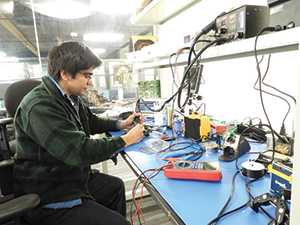 “It’s a highly specialized field, but I launched this company with deep industry and academic experience, along with a strong professional network. Whether it’s computer vision or machine learning, I have access to top experts and the resources to turn their ideas into reality,” says Kevin Weekly, CEO.
The company’s advisors don’t just lend credibility—they build, test, and iterate alongside the core team. Formed from professional and academic ties going back to graduate school at UC Berkeley, the group includes professors from UCLA, Harvey Mudd, and Oregon State—all UC Berkeley PhD grads. One advisor brings expertise in biophysical signals and machine learning; another is an optical scientist who previously worked at Fitbit. Together, they act as a think tank, a technical sounding board, and an extension of the engineering team—actively consulting on projects that serve as both real-world applications and experimental playgrounds.
-
It’s a highly specialized field, but I launched this company with deep industry and academic experience, along with a strong professional network. Whether its computer vision or machine learning, I have access to top experts and the resources to turn ideas into reality
The team has brought a wide range of hardware to market, including wearable tech, home cleaning robots, smart home devices, and personal EEG systems. The company’s work in AI involves training, inference, and prediction, using diverse data sources to recognize complex patterns and make intelligent decisions—pushing the boundaries of next-gen computing. It specializes in edge computing for low-power, resource-constrained environments like IoT, having deployed advanced ML models and DSP algorithms on battery-powered Cortex-M4 platforms. On the software side, they’ve built complex frameworks, GUIs, and simulations in C/C++, Python, and MATLAB, along with full-stack web applications using Flask, Jinja2, and JavaScript. Think Circuits also helps clients move robotics projects from concept to real-world systems, guiding development from architecture to proof-of-concept and MVP—delivering products that are not only functional but also scalable and reliable in the field.
Mapping the Path to Product
The engagement process typically begins with a strategy session or call. At this early stage, the focus isn’t on technology or engineering—it’s about building mutual understanding. The goal is to learn what the client is aiming to achieve, their mission, and the impact they have on customers. Since every successful company delivers real value to customers, the team works to understand the client’s value proposition—why customers choose their product or service.
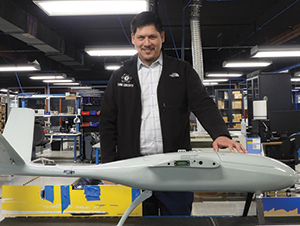 The team also explores the strategic opportunity from the client’s perspective. This includes understanding the potential business impact—whether the work could drive revenue growth, reduce costs, or create other meaningful outcomes. The purpose is to get everyone aligned on the why before diving into the how.
As the engagement progresses, the focus shifts to identifying the technical milestones and deliverables required to meet those strategic goals. During this phase, key risks and uncertainties are surfaced—especially those that could significantly impact the project. These are addressed early through phases dedicated to de-risking critical enabling technologies.
Once the major risks are resolved and the team has a solid grasp of the potential benefits and a more predictable timeline, the project moves into full-scale development. With alignment, clarity, and a de-risked foundation, the team proceeds to build and deliver the final product.
When Physics Meets AI in the Kitchen
A good example of this process in action is Combustion—a company founded by a Michelin-starred chef with a bold idea: to create the smartest wireless probe thermometer on the market. The vision was to design a device with cutting edge algorithms capable of delivering accurate, real-time temperature readings using only the hardware inside the probe. Despite years of effort and help from top academic minds, the technical challenge remained unsolved. Think Circuits helped develop a hybrid physics and AI model that runs directly on the device, overcoming severe constraints in processing power, memory, and energy. The result was a breakthrough product—fast, precise, and fully self-contained, with no need for cloud processing. Today, Combustion’s thermometer stands as a category-defining tool and the fulfillment of the CEO’s long held vision, setting a new benchmark in the culinary tech space.
Defining the Model, Scaling the Mission
 The company is already operating on a global scale, with two of its clients being international and ongoing collaboration happening across borders. Looking ahead, the primary focus will be on formalizing its product and service offerings. While Think Circuits has always been eager to help, its flexible and informal approach has sometimes made it unclear how clients can engage. The goal now is to bring clarity to the services, streamline internal processes, and make it easier for the right clients to understand what’s offered and whether they’re a good fit.
Think Circuits doesn’t step in when things are easy—it shows up when the stakes are high and the path forward isn’t obvious. With a track record of turning technical dead ends into working products, the team thrives in complexity. The company’s edge isn’t just technical f irepower—it’s the ability to align deep engineering with real business goals and then deliver. As Think Circuits evolves its model and brings more clarity to how it works with clients, the mission stays the same: build the systems others can’t—and make bold ideas real.
| Share this Article:Tweet
|
Company
Think Circuits
Management
Kevin Weekly, CEO
Description
Think Circuits is a technology R&D firm focused on solving pressing real-world technical challenges by enhancing the impact of technology products through custom artificial intelligence and machine learning development. From building sophisticated software algorithms to innovating robotic capabilities, it takes creativity and cohesion to deliver research-driven solutions for clients.

This content is copyright protected
However, if you would like to share the information in this article, you may use the link below: