
Thank you for Subscribing to Semiconductor Review Weekly Brief
× 
Semi Conductor Review Weekly Brief
Be first to read the latest tech news, Industry Leader's Insights, and CIO interviews of medium and large enterprises exclusively from Semi Conductor Review
has been recognized by Semiconductor Review Magazine as the exclusive recipient of “Semiconductor Power Control Solutions Company of the Year In Asia 2026,” based on our proprietary methodology, reflecting its position in the industry, and is also named among “Top Semiconductor Manufacturing Services In APAC,” reflecting its broader leadership. This profile has been developed by the Semiconductor Review research and editorial team based on insights from an interview with Masahiro Ogawa, CTO.



Miraxia Edge Technology
Extending the Value of Power Control across the Product Lifecycle

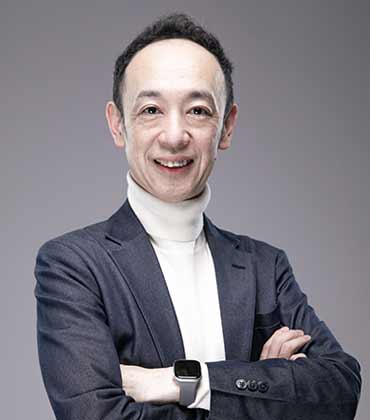 Masahiro Ogawa, CTO
Yet developing a high-performance system is only part of the challenge. Once products enter the field, manufacturers must contend with component obsolescence, evolving cybersecurity requirements, growing software complexity and the gradual loss of institutional knowledge. As industrial systems become increasingly interconnected and software-driven, long-term sustainability has become as important as innovation itself.
This is where Miraxia Edge Technology has established its position. Specializing in embedded systems, power electronics and integrated hardware-software development, the company provides engineering services that span product design, production, operation and long-term maintenance. Drawing on expertise cultivated in Panasonic's Semiconductor Division, it combines semiconductor knowledge, software development capabilities and system-level engineering to help customers address both technical performance and operational resilience.
“From evaluation and architecture design through verification, mass production, operation and business continuity planning, we help ensure products continue delivering value throughout their operational life,” says Masahiro Ogawa,
CTO.
Delivering Value through Power Control Technologies
The company’s engineering capabilities are built around power control technologies that improve efficiency, optimize energy use and maintain stable operation across a wide range of industrial and energy applications. In recognition of its expertise in power control technologies and long-term engineering services, Miraxia is named the Semiconductor Power Control Solutions Company of the Year in Asia 2026.
Its digital power control solutions support applications including Vehicle-to-Home (V2H) systems, Vehicle-to-Grid (V2G) systems, energy storage systems, industrial robots and servers. Through advanced digital control technologies and the use of SiC and GaN devices, the company delivers highly efficient power conversion while maintaining the stability required in demanding operating environments. Development is supported by simulation-based verification of voltage and current waveforms, enabling engineers to optimize power factor, reduce conduction and switching losses, and achieve stable, high-efficiency power conversion before hardware implementation.
Wireless power transfer is another important part of its portfolio. Designed for applications such as AGVs and industrial robots, Miraxia's wireless charging technologies enable contactless power delivery while improving operational flexibility. Proprietary technologies that accommodate positional variation help maintain stable charging performance, while compact and lightweight designs simplify installation and enhance factory efficiency.
AGV applications present particularly demanding design constraints, where limited receiver-side installation space makes it difficult to achieve both miniaturization and high charging efficiency. To address this challenge, Miraxia applies its patented circuit technology to suppress power loss while reducing receiver size, overcoming a trade-off that typically exists between compactness and efficiency. The result is wireless charging systems that improve charging efficiency while providing greater installation flexibility and operational reliability.
Complementing these solutions is the company's expertise in power electronics engineering. Miraxia develops bidirectional converters, isolated resonant converters such as LLC and CLLC systems and advanced DC-DC control technologies for automotive, industrial and energy-related applications. Its development and verification environment combines simulation with real-world testing, enabling engineers to evaluate system behavior, reduce development risk, and accelerate the transition from design to mass production.
This capability is particularly valuable in applications where efficiency, reliability, and precise power management directly influence overall system performance. By combining power electronics expertise with system-level engineering knowledge, it addresses challenges related to energy conversion, control optimization, and system integration. Experience across automotive, industrial and energy-related applications enables the company to customize solutions to specific operating requirements while maintaining a clear focus on production readiness and long-term operational stability.
Bridging Devices and Systems through Integration
Miraxia understands that reliable industrial performance depends on more than advanced power technologies alone. Modern systems require the effective integration of semiconductors, software, sensors and hardware platforms. Through its Device System Integration approach, the company brings together expertise in embedded software, semiconductor technologies, sensing technologies and system architecture to optimize performance at both the device and system levels.
By developing hardware and software in parallel, Miraxia helps customers balance performance, reliability, quality and manufacturability throughout the development process. And by identifying potential issues earlier, it reduces development complexity and improves product readiness for deployment and production.
This capability is reinforced by the company's extensive experience in semiconductor-related engineering, which has provided a deep understanding of device technologies, manufacturing processes, software development,and system design. The result is an engineering model that connects device-level expertise with product-level execution, enabling customers to move more efficiently from development to production.
As a hidden champion in this field, Miraxia extends its expertise beyond technology development to address the operational challenges customers encounter after products enter the market.
“By connecting engineering decisions made during development with the realities of production and long-term operation, the company helps customers maintain system performance and operational continuity long after deployment,” says Masahiro Ogawa, CTO.
Sustaining Long-Term Operation and Business Continuity
Beyond product development, Miraxia helps manufacturers manage the long-term challenges that arise throughout a product's operational life. The company provides services focused on maintenance, risk mitigation and lifecycle management to help customers address component obsolescence, cybersecurity vulnerabilities and evolving regulatory requirements.
One example is Miraxia's MCU EOL Requirements Definition Service. By combining microcontroller expertise with AI-assisted analysis, the service generates requirements-definition documentation from existing source code. This allows customers to visualize software structures, identify affected areas, assess migration risks, estimate resource requirements and accelerate replacement planning. By standardizing the requirements-definition process, the service reduces engineering workloads while improving planning visibility and maintainability.
Miraxia also provides vulnerability maintenance services that help manufacturers respond to emerging cybersecurity threats and evolving regulations, including the EU Cyber Resilience Act (CRA). Combining ongoing vulnerability management with deep engineering expertise, the company helps customers strengthen operational continuity while preparing for future compliance requirements.
-
From evaluation and architecture design through verification, mass production, operation, and business continuity planning, we help ensure products continue delivering value throughout their operational life.
Miraxia also provides vulnerability maintenance services that help manufacturers respond to emerging cybersecurity threats and evolving regulations, including the EU Cyber Resilience Act (CRA). Combining ongoing vulnerability management with deep engineering expertise, the company helps customers strengthen operational continuity while preparing for future compliance requirements.
As cybersecurity requirements continue to evolve, manufacturers are increasingly expected to maintain software and system security throughout the operational life of their products. Miraxia's vulnerability maintenance services help organizations establish a more structured approach to identifying, assessing and responding to emerging risks while addressing evolving regulatory expectations. As a result, customers can strengthen product sustainability without diverting significant internal engineering resources from core development activities.
Extending Product Value beyond Development
The company’s approach is built on the belief that the value of power control extends beyond product development. By combining power control technologies, system integration expertise and long-term engineering services, it helps customers address both immediate development objectives and future operational requirements.
This integrated approach enables industrial equipment manufacturers to move from concept to deployment with confidence while maintaining reliability, continuity and competitiveness throughout their operational life. By connecting design, mass production, operation and long-term maintenance, long-term operational resilience, Miraxia helps customers maximize the value of power control across the entire product lifecycle.
Managing Power Control Risk from Design Bench to Product Renewal
Power control projects now fail at the handoff between electrical design and embedded control. A converter can meet bench targets yet miss the enclosure, thermal budget, firmware timing and sourcing plan that determine whether a product can be manufactured consistently. Industrial equipment manufacturers face that pressure earlier in procurement, since electrification has pushed power electronics closer to core product architecture. The buying question is no longer whether a supplier can design a circuit. It is whether the supplier can make power loss, heat, electromagnetic noise and firmware behavior visible before the program commits to a production path.
A useful review starts inside the control loop. Semiconductor selection has to be judged against circuit topology, switching behavior, available MCU resources and the verification plan that will prove the design outside simulation. Digital control can improve responsiveness and conversion efficiency, but only when hardware choices and embedded software are developed as a coupled system. Procurement teams should be wary of firms that separate schematic work from firmware ownership, since that split often delays fault analysis, test coverage, release timing and late-stage tuning. Evidence matters here. A partner should show how simulation results, waveform verification, board-level testing and mass-production constraints inform one another rather than sit in separate workstreams.
The harder programs compress opposing targets into the same housing. Wireless charging for mobile equipment, power conditioning systems, energy storage interfaces and bidirectional converters all place pressure on size while raising expectations for lower losses. Space constraints create thermal penalties. Efficiency targets demand greater control precision. Installation realities then add misalignment, vibration, duty-cycle variation and service access to the design brief. Suppliers worth serious review need more than device familiarity. They need a repeatable method for resolving tradeoffs before the prototype becomes the specification.
Long-life industrial equipment introduces a quieter risk. The MCU may reach end-of-life before the machine family does, and the original documentation may be incomplete or stale. Security obligations are also moving deeper into embedded products, making vulnerability handling part of product stewardship rather than an afterthought. Commercial terms should reflect that complexity. Fixed handoffs between power electronics, embedded firmware, validation and lifecycle service look tidy on a statement of work, then become expensive when a design change crosses boundaries. Buyers should look for source-code expertise, migration planning, sound MCU replacement strategies and disciplined post-release support. These issues are not peripheral to power control. They determine whether a product remains maintainable after launch.
Miraxia Edge Technology matches this procurement profile where power electronics requires engineering depth rather than catalog supply. Its work in digital power control spans circuit design and MCU control software, while its power electronics practice covers V2H/V2G chargers, energy storage systems, robots and servers. For wireless charging, it provides contactless AGV and robot charging, including compact 600W-class units and control methods designed to tolerate positional misalignment. Its MCU EOL requirements definition service extends that support for long-life products, using existing source code to produce replacement plans, resource allocation documents, candidate MCU comparisons and tentative schedules. For buyers balancing power efficiency, software risk, MCU EOL exposure and long-term product renewal, Miraxia Edge Technology represents a measured engineering partner.
...Read more
Semiconductor Power Control Solutions Companies in Asia Info
Q1
What Are Semiconductor Power Control Solutions?
Semiconductor Power Control Solutions combine hardware, software and control algorithms to regulate how electrical power is converted, distributed and managed across electronic systems. These solutions help improve energy efficiency, system stability and thermal performance while supporting applications such as electric vehicles, industrial automation, energy storage and data centers. As power electronics become more sophisticated, organizations increasingly rely on Semiconductor Power Control Solutions to deliver reliable performance and support evolving energy requirements.
Q2
How Does Miraxia Edge Technology Deliver Semiconductor Power Control Solutions?
Miraxia Edge Technology develops Semiconductor Power Control Solutions by combining digital power control, embedded software expertise and power electronics engineering. Its capabilities include bidirectional LLC and CLLC resonant converter design, DCDC and ACDC power conversion, hardware prototyping and software-hardware co-simulation. The company also works with SiC and GaN semiconductor devices to improve efficiency and reliability across applications such as EV charging, energy storage, robotics and server infrastructure.
Q3
What Features Should Organizations Evaluate in Semiconductor Power Control Solutions?
When evaluating Semiconductor Power Control Solutions, organizations should consider conversion efficiency, control precision, scalability, simulation capability, safety features and compatibility with emerging semiconductor technologies. Solutions that integrate firmware development with circuit design can shorten development cycles while reducing design risks. Support for advanced devices such as SiC and GaN, along with flexible software architecture, also contributes to long-term product performance and easier technology upgrades.
Q4
Why Are Semiconductor Power Control Solutions Becoming More Important?
Demand for Semiconductor Power Control Solutions continues to grow as industries adopt electrification, renewable energy systems and intelligent industrial equipment. Efficient power management reduces energy losses, supports compact product designs and improves operational reliability. Modern applications also require faster response, accurate digital control and seamless integration between hardware and embedded software, making advanced power control an important part of next-generation electronic systems.
Q5
How Does Miraxia Edge Technology Support Long-Term Product Reliability?
Beyond developing Semiconductor Power Control Solutions, Miraxia Edge Technology helps customers extend product lifecycles through engineering services such as MCU end-of-life planning and migration support. The company analyzes existing software, prepares replacement strategies and compares suitable MCU alternatives to reduce redesign risks. It also develops wireless power transfer solutions, including compact charging systems for automated guided vehicles and robotics, expanding its expertise beyond conventional power conversion.
Q6
What Business Value Do Semiconductor Power Control Solutions Provide?
Effective Semiconductor Power Control Solutions help organizations improve energy efficiency, lower operating costs and increase product reliability throughout the development lifecycle. They also support faster validation through simulation, simplify integration between hardware and software and prepare products for future semiconductor advances. As power electronics continue to evolve across transportation, industrial automation and energy infrastructure, selecting well-engineered Semiconductor Power Control Solutions can strengthen both product performance and long-term maintainability.
| Share this Article:Tweet
|
Company
Miraxia Edge Technology
Management
Masahiro Ogawa, CTO
Description
Miraxia Edge Technology is an engineering company specializing in embedded systems, power electronics, and integrated hardware-software development. Leveraging semiconductor expertise rooted in Panasonic's Semiconductor Division, the company provides one-stop support from design and verification to mass production and long-term operation, helping customers develop reliable, efficient, and manufacturable products.
This content is copyright protected
However, if you would like to share the information in this article, you may use the link below:
https://www.semiconductorreview.com/miraxia-edge-technology-2026