


Thank you for Subscribing to Semiconductor Review Weekly Brief
× 
Semi Conductor Review Weekly Brief
Be first to read the latest tech news, Industry Leader's Insights, and CIO interviews of medium and large enterprises exclusively from Semi Conductor Review
LQDX has been recognized by Semiconductor Review Magazine as “Top Semiconductor Manufacturing Company - 2024” based on our proprietary methodology, reflecting its position in the industry. This profile has been developed by the Semiconductor Review research and editorial team based on insights from an interview with Simon McElrea, CEO of LQDX.


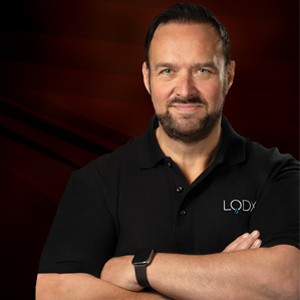 Simon McElrea, CEO of LQDX
Originating from Stanford Research Institute and perfected in Silicon Valley's rigorous tech environment, LQDX is transforming the application of fine line circuitry in advanced semiconductor devices—crucial for the growing domains of high-performance computing and AI technologies.
This innovation achieves unprecedented accuracy in micro-scale circuitry, catering to the escalating demands of an industry at the cusp of a technological revolution. As dependence on high performance computing grows, so does the need for such pioneering materials and processes, positioning LQDX at a crucial market juncture.
Amidst a global technological shift driven by artificial intelligence and advanced computing, LQDX's emergence is timely, meeting pressing industry needs. The company's focus is sharp: it aims to advance semiconductor packaging with its patented nano-inks, developed over nearly a decade. These inks are tailored to meet the stringent demands of the semiconductor growth inflection while being a drop-in replacement to existing industry infrastructure.

While the semiconductor industry advances, it faces substantial challenges, like the need for novel advanced material and process solutions for circuit fabrication and packaging. Here, LQDX offers significant advancements, enabling atomic-level metallization on 3D surfaces. This capability allows for more complex and denser semiconductor architectures at a fraction of the cost of traditional methods.
"As AI and high-performance compute reshape our landscape, LQDX's liquid metal inks are essential tools in the toolbox, and enable the next decade of the Semi roadmap,” states Simon McElrea, CEO of LQDX.
The Future of Interconnect
LQDX is crafting pioneering solutions that meet the increasing demands of the next decade. Its platform includes a range of innovative technologies, from ultra-dense integrated circuit substrates to advanced multi-layer interposers and cutting-edge wafer-level techniques. With a rich heritage rooted in high-level government contracts and covert programs, the LQDX team has a broad knowledge base in sub micron interconnect solutions.
LQDX’s Nano-Inks mimic the principles of physical and chemical vapor deposition, yet can be dipped, sprayed, spun or jetted onto the substrates, and hence provide a simple low-cost alternative method of creating ultra fine-line circuits. The atomic-scale metallization of the Nano-Inks ensures uniform and conformal metal deposition—a critical factor in producing high-quality printed circuit boards that incorporate metals such as palladium.
Palladium has played a bedrock role in the manufacturing of printed circuit boards for decades, serving as the essential material binding the copper circuitry to the dielectric layers beneath.
The versatility of LQDX’s metal inks, which include palladium, gold, platinum, silver, and copper, is showcased through their application in liquid form via conventional methods like spray, spin, and dip coating, as well as plating baths. This use leverages existing infrastructure typically found at the semiconductor supply chain's back end.
The impact of LQDX’s technology is particularly notable in advanced chiplet architectures ramping into use in AI, high performance computing, and data centers. By driving novel material innovations, LQDX not only enhances the capabilities of semiconductor technology but also ensures its accessibility and economic viability, setting the stage for future advancements in the industry.
While front-end materials and processes are typically much more expensive than back-end equivalents — up to ten times the cost - LQDX’s materials are uniquely positioned to be used at the front end while maintaining back-end cost-effectiveness. This approach contrasts sharply with more expensive and complex PVD processes that require cleanroom environments and highly automated production lines. LQDX’s cost-efficient wet chemistry solution substantially reduces installation and operational costs, potentially lowering them by an order of magnitude compared to traditional methods.
-
Our Primary Value Proposition Is Pvd-In-A-BottleTM – Providing Front-End Scale Solutions At A Fraction Of The Cost By Using Back-End Infrastructure To Deploy It
“This chiplet architecture is a key focus area and illustrates how we intend to deploy our materials in the coming years,” states McElrea, underlining the strategic importance of their current projects.
The CHIPS Act
Before the creation of the CHIPS Act, LQDX had significant involvement with government contracts, forming strategic alliances with industry powerhouses such as Lockheed Martin (NYSE:LMT). CHIPS aims to enhance U.S. manufacturing capabilities and develop a robust talent pipeline for future advancements, and LQDX intends to continue the work they started on this front to shore-up vital US semiconductor packaging capabilities.
LQDX’ business model is based on integration and licensing. This approach demands a synergistic approach involving material, process and equipment experts, designers and manufacturers; all orchestrated to scale product solutions within an intellectual property framework.
Despite a diverse product solution portfolio that includes biomedical materials, hydrogen fuel cell catalysts and fine-line printed circuit board technology, LQDX current primary focus is AI-driven semiconductor packaging. This strategic pivot leverages the company’s chemical intellectual property to enhance the capabilities of major players in the semiconductor industry. The burgeoning demand for AI chips, which outpaces the demand for non-AI chips tenfold, and its associated Chiplet architecture, which segments chips into smaller tiles on an interposer with ultra-fine interconnects, highlights the critical role of high-performance computing as the primary driver in this sector.
Furthermore, LQDX is deeply committed to cultivating the next wave of technology leaders. The company actively participates in conferences and seminars to promote semiconductor technology careers in the U.S., where software opportunities typically eclipse those in hardware and advanced manufacturing.
LQDX aims to cultivate and develop the necessary talent pool to sustain the sector’s growth through its involvement in funding initiatives, educational programs, and advocacy.
Setting a New Benchmark in Metallurgical Innovation
In a year marked by strategic breakthroughs and significant advancements, LQDX has achieved profitability and has set a new benchmark in metallurgical innovation. The company has demonstrated robust business acumen and a keen ability to navigate complex regulatory landscapes, securing grants and generating substantial revenue through projects with government contractors and top-tier semiconductor partners.

Central to LQDX’s success is its resolution of longstanding challenges in metallization for defense contractors - a feat that had eluded many - however, plans are underway to expand commercial operations, focusing on leveraging its business model as an intellectual property (IP) firm. Located in Santa Clara, California, LQDX specializes in inventing and developing advanced materials, and partners with key players in the industry to take its innovations to the mass market.
LQDX’s collaboration with Taiyo Holdings Ltd., a leading Japanese semiconductor materials provider, is a prime example of such innovation. Having developed and patented MINA®, a unique direct aluminum soldering solution, LQDX divested this business to Taiyo while retaining a royalty revenue stream, exemplifying their strategy of inventing, developing, scaling through partnership, and achieving market success.
Team of Luminaries and Future Plans
LQDX’s primary focus is to forge partnerships with Tier-1 industry players throughout the semiconductor supply chain, enabling the swift scale-up of its IP-driven model. These collaborations allow large corporations to integrate LQDX’s Liquid Metal Inks and process technology solutions into their products and platforms via technology transfer and ongoing technical support and advancement.
Since late 2023, LQDX’s CEO, Simon McELrea, has guided the company with a solid background in startups, deep tech, and roles at prestigious firms like Honeywell and Johnson Matthey. His education in chemistry and engineering from Oxford University has fueled the successful sale and public listing of a number of previous ventures, setting the stage for pioneering developments in the semiconductor sector.
McElrea, recognizing the potential of LQDX’s unique semiconductor IP, initiated top-to-bottom strategic changes in order to focus on the AI semiconductor market. This pivot involved restructuring every element of the business, divesting certain core assets and product lines, repositioning, and rebranding the company for success.
Joining McElrea on the leadership team is Scott Meikle as executive chairman, who brings extensive corporate executive experience from Lam Research and Inotera Memories (acquired by Micron). Rozalia Beica, appointed as Chief Commercial Officer in late 2023, has a notable background with AT&S, Applied Materials, and DuPont. The company’s Chief Scientist, Sunity Sharma, hails from the Stanford Reasearch Institute and spearheads the invention and development of innovative inks, supported by a dedicated team.
With its focus on AI-driven semiconductor packaging, and a commitment to pioneering the next node of semiconductor technology and technology leaders within the United States, LQDX is strategically positioned to lead in the next decade of exponential technological advancement.
| Share this Article:Tweet
|
Company
LQDX
Management
Simon McElrea, CEO of LQDX
Description
LQDX [www.LQDX.com] formerly Averatek Corp., pioneers advanced materials for AI and high-performance computing applications, unlocking new possibilities for the semiconductor industry. Founded in collaboration with the Stanford Research Institute (SRI), the company, based in Silicon Valley California, has developed a suite of cutting-edge chemistries and process technologies to revolutionize chip interconnect architecture.
This content is copyright protected
However, if you would like to share the information in this article, you may use the link below: