


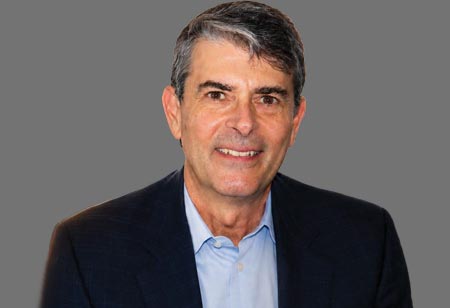
Evangelos Simoudis
Evangelos Simoudis is a recognized expert in AI and new mobility with 35 years of Silicon Valley experience as an investor, entrepreneur, corporate executive, and technologist. He is the managing partner of Synapse Partners, an accomplished author and advisor to corporations, governments, and academic institutions, holding a Ph.D. in computer science.
The AI Stakeholder Squeeze
Corporate executives are under pressure to demonstrate positive results from using AI in their organizations. Because the semiconductor industry is an early adopter of technology, its executives feel this pressure. The pressure comes from multiple directions: customers, partners, employees, and shareholders. In response, executives impose new performance metrics on employees, establish new AIcentric or AI-enhanced processes, and require employees to use new applications.
Employees feel their own AI-induced pressure, including anxiety about their employment future and skill obsolescence. The result is what I call the ‘AI Stakeholder Squeeze.’ Neither group can relieve it just by working harder.
Corporations typically respond by forming an AI committee to decide which AI solutions to license, or a Center of Excellence to build AI solutions. They view AI as just another technology to apply rather than as an opportunity to transform the corporation’s operations and processes. This approach results in dozens of AI pilot projects that never reach production, a condition I call Pilot Purgatory.
Navigating the AI Productivity Dip
When AI is introduced into an established process, performance usually gets worse before it gets better. Hand-offs break, error rates rise, and unit costs go up while people learn the new workflow. The result is a predictable productivity dip, perhaps the most dangerous period of the ‘AI Stakeholder Squeeze.’
During this period, AI investment peaks, and results are at their worst. Employees, who were merely anxious before AI was introduced, now start to believe that the new process does not work. With the AI Stakeholder Squeeze at its highest point, enterprises tend to cancel their most transformative projects while keeping the least ambitious, but admittedly low-risk ones.
From the outside, an ongoing transformation and a failing project look the same: costs up, output down, employees unhappy. To tell them apart, we recommend corporations manage their AI projects as a venture investment portfolio and use the AI GPS to monitor its performance. The AI GPS is a dashboard integrating four connected curves that are explained below. Each curve has a named owner. When used properly, the AI GPS ensures that the portfolio management is based on the best and most appropriate project information, enabling the most transformative AI projects to survive and thrive.
Assigning Accountability across the AI Portfolio
The Transformation Investment curve, owned by the CIO or CTO, records the full cost of the transformation, including redesigning processes and retraining people, not only cloud and model charges. It rises during rollout and should fall as processes stabilize.
The adoption curve, owned by the head of HR, tracks how quickly the workforce uses the new workflow. It moves first, so it is the earliest reliable signal.
The productivity curve, owned by the business unit leader, tracks error and rework rates and the fully burdened cost of each successful outcome.
"Semiconductor companies that recognize the AI Stakeholder Squeeze should set up the AI GPS before their next AI project leaves the pilot stage, not after its results disappoint."
The portfolio curve, owned by the CFO, combines the other three into the return on the enterprise's entire set of AI projects. Because it combines them, it moves last.
The dashboard works only if the executive team commits in advance to the constraints it will tolerate in the portfolio as a whole, and each specific project. For example, how deep the productivity dip resulting from a project’s AI-centric transformation will be and how long it will last. With those constraints agreed upon while things are calm, a bad quarter becomes a comparison against a commitment rather than an argument about whether AI works.
The executive team reviews the curves monthly, ensuring that problems will be detected quickly and solutions will be applied promptly. The dashboard shows whether the transformation is working; how much capital to release or withhold remains a separate decision.
Setting the Rules for AI Transformation
Semiconductor companies that recognize the AI Squeeze should set up the AI GPS before their next AI project leaves the pilot stage, not after its results disappoint. That means naming the owner of each curve, recording each target process’s current performance as its baseline before AI is introduced, and agreeing, for every project and for the portfolio, how far performance may fall and for how long.
The executive team should then give the board, the workforce and investors the same account of those commitments, so that a project inside its agreed constraints keeps its funding and a project outside such constraints is stopped. Semiconductor companies should start with the processes their fabs, test floors, and supply planning teams already measure precisely, such as yield, cycle time and defect rates, because a reliable baseline already exists there.
The corporations that come through the AI Stakeholder Squeeze will be those that decide in advance what a successful transformation looks like and measure themselves against that decision every month. Semiconductor leaders should make that decision now, before the productivity dip forces the board to make it for them.
