


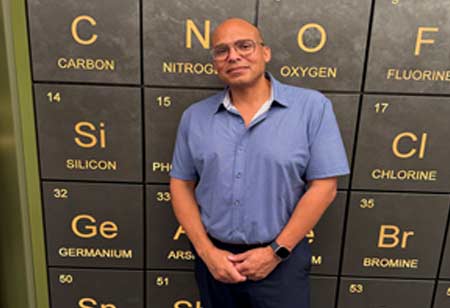
Eric Baker
Over the past three decades, I have had the opportunity to work across much of the semiconductor manufacturing ecosystem, from equipment maintenance and field service to process engineering, operations leadership, advanced packaging and lithography. That journey has shaped how I approach technical challenges today, successful semiconductor manufacturing is rarely about finding the most sophisticated solution. More often, it is about creating processes, systems and teams capable of delivering reliable results consistently and at scale.
Turning Complexity into Process Discipline
One lesson I have learned repeatedly is that complex engineering problems often present themselves through complicated symptoms while having relatively straightforward root causes. In manufacturing environments, the greatest challenge is frequently not identifying a solution, but establishing enough process discipline and data integrity to understand what problem actually needs to be solved.
Throughout my career, some of the most impactful improvements have resulted from creating structure around decision-making. Whether evaluating capital equipment, enabling manufacturing flexibility between technologies or implementing process improvements, the underlying principle remains the same, decisions should be grounded in measurable data rather than assumptions. Statistical process control, reliable metrology and disciplined data collection do not eliminate complexity, but they help teams separate signal from noise and focus their efforts where they matter most.
Making Innovation Ready for Manufacturing
As the semiconductor industry continues to push performance boundaries, advanced packaging represents one of the most significant manufacturing transitions in recent memory. New substrate technologies, increasing interconnect density and larger manufacturing formats are introducing challenges that extend well beyond individual process tools.
Glass-based advanced packaging, in particular, presents compelling opportunities while requiring the industry to solve new manufacturing problems involving panel handling, dimensional stability, warp management and multilayer registration. As packaging architectures become more complex, maintaining critical-dimension control and overlay performance across larger substrates will become increasingly important. Success will depend not only on process capability, but also on the readiness of the broader manufacturing ecosystem, including materials suppliers, metrology solutions, inspection technologies and equipment vendors.
Innovation alone, however, is never enough. One of the most important lessons I learned while managing leading-edge lithography operations is that every technical breakthrough must be evaluated through the lens of manufacturability. A process that performs exceptionally well in development has limited value if it cannot be maintained, scaled or operated consistently in production.
Reliability, maintainability and operational stability must be considered alongside technical performance from the beginning of any project. The most successful organizations incorporate these requirements into their development and qualification strategies early rather than treating them as downstream concerns. Innovation creates possibilities, but manufacturability creates products.
Leading from the Manufacturing Floor
My experience in engineering leadership has reinforced another important reality, technical challenges are ultimately solved by people. While manufacturing organizations often focus on equipment capabilities, process metrics and technology roadmaps, long-term success depends equally on culture, teamwork and ownership.
The highest-performing teams I have worked with share a common characteristic. Team members consistently take ownership of problems, collaborate across organizational boundaries and seek opportunities to improve systems before being asked. Leaders play a critical role in creating that environment by establishing trust, communicating openly, investing in employee development and removing barriers that prevent teams from succeeding. When people understand that their contributions matter and that leadership is invested in their success, engagement and performance naturally follow.
For engineers interested in pursuing leadership roles, my advice is simple, learn the process before trying to lead it. Spend time on the manufacturing floor. Understand how equipment operates, how technicians troubleshoot issues and how engineering decisions affect production. Hands-on experience creates credibility and provides context that cannot be gained through reports or meetings alone.
Equally important, leadership is less about having all the answers and more about asking the right questions. The best leaders remain curious, listen carefully, encourage diverse perspectives and create conditions in which teams can do their best work. They also communicate the why behind important decisions, giving people the context needed to understand priorities and act with purpose. As a guiding principle, leaders should continually ask what is best for the company while also considering what will help each individual develop, contribute and succeed. Technical expertise may open the door to leadership opportunities, but developing people, building trust and creating sustainable organizational capability are what define long-term success.
Across every role I have held, from technician to engineering leader, one lesson has remained constant, the semiconductor industry's most difficult challenges are solved not by individual expertise alone, but through the combination of disciplined engineering, structured problem-solving and teams empowered to take ownership of the outcome.
