


Thank you for Subscribing to Semiconductor Review Weekly Brief
× 
Semi Conductor Review Weekly Brief
Be first to read the latest tech news, Industry Leader's Insights, and CIO interviews of medium and large enterprises exclusively from Semi Conductor Review
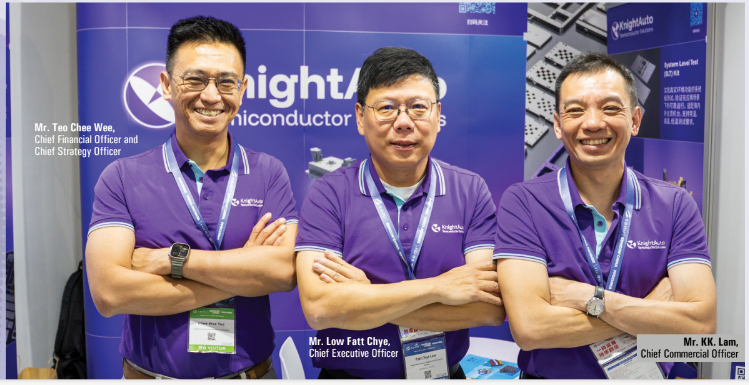
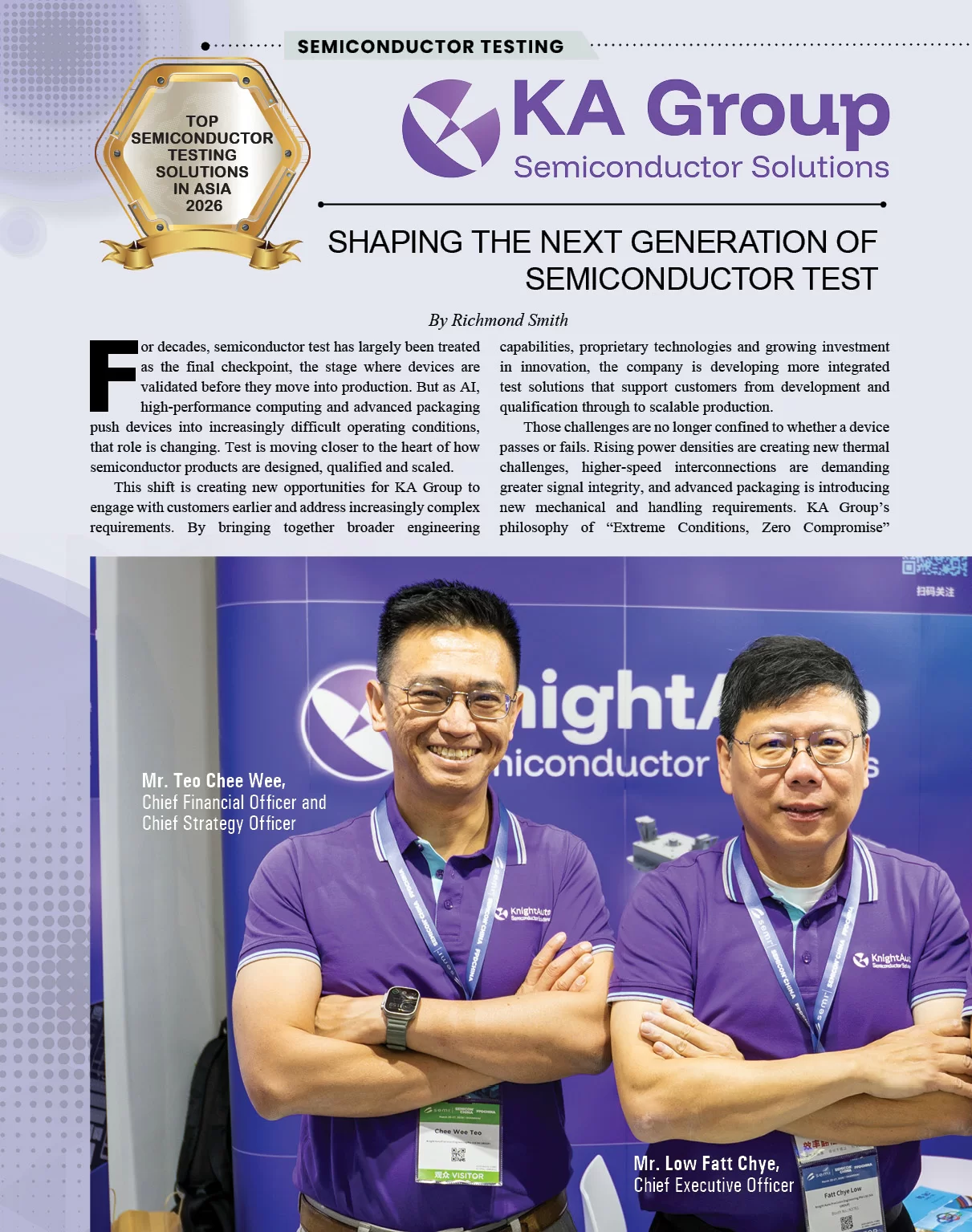
KA Group has been recognized by Semiconductor Review Magazine as the exclusive recipient of “Top Semiconductor Testing Solutions in Asia 2026,” based on our proprietary methodology, reflecting its position in the industry, and is also named among “Top Testing and Quality Assurance Companies In APAC,” reflecting its broader leadership. This profile has been developed by the Semiconductor Review research and editorial team based on insights from an interview with Mr. Low Fatt Chye, Chief Executive Officer, Mr. KK. Lam, Chief Commercial Officer and Mr. Teo Chee Wee, Chief Financial Officer and Chief Strategy Officer.


For decades, semiconductor test has largely been treated as the final checkpoint, the stage where devices are validated before they move into production. But as AI, high-performance computing and advanced packaging push devices into increasingly difficult operating conditions, that role is changing. Test is moving closer to the heart of how semiconductor products are designed, qualified and scaled.
This shift is creating new opportunities for KA Group to engage with customers earlier and address increasingly complex requirements. By bringing together broader engineering capabilities, proprietary technologies and growing investment in innovation, the company is developing more integrated test solutions that support customers from development and qualification through to scalable production.
Those challenges are no longer confined to whether a device passes or fails. Rising power densities are creating new thermal challenges, higher-speed interconnections are demanding greater signal integrity, and advanced packaging is introducing new mechanical and handling requirements. KA Group’s philosophy of “Extreme Conditions, Zero Compromise” reflects the increasingly demanding environments in which its customers operate, with capabilities spanning wafer test, final test and advanced test.
People, Innovation and Growth
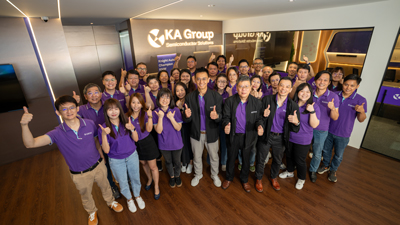
As KA Group looks to the next phase of its development, people and innovation are becoming increasingly important to how the company builds and strengthens its capabilities. Employees are being given wider exposure and encouraged to broaden their horizons, become more creative and contribute new ideas.
 Innovation has become a more deliberate investment. KA Group has strengthened its innovation capabilities and its KA Groups Innovation Center, supported by the Singapore Economic Development Board. The company plans to expand its innovation team significantly over the coming years.
The broader group structure also allows KA Group to combine the strengths of its businesses and make greater use of its design expertise and proprietary processes.
Engineering Around the Customer’s Problem
KA Group’s engineering model starts with the customer’s application rather than with an existing product. Each engagement begins by defining the device architecture, package format, throughput requirements and reliability targets before a solution is developed.
Engineers consider mechanical stability, contact reliability, signal integrity and thermal performance as part of the design process. Solutions are then validated under actual manufacturing conditions, while field service engineers remain involved through qualification and production. Insights from customer sites are fed back into KA Group’s design and innovation process, allowing solutions to evolve as pin counts, tolerances and package formats change.
“The conversations we are having today are very different from those we had five years ago. Customers are asking how to accelerate qualification, improve yields, shorten product ramps, and scale production without compromising reliability,” says Mr. KK. Lam, Chief Commercial Officer.
The shift is particularly visible in the kinds of problems customers now bring to KA Group. Cost, quality, thermal performance, interconnection and packaging challenges increasingly require engineering that goes beyond a conventional test component.
Turning a Customer Problem Into a Solution
One of the clearest examples came from a customer facing cost and quality issues. Instead of simply specifying another product, the customer brought the underlying problem to KA Group.
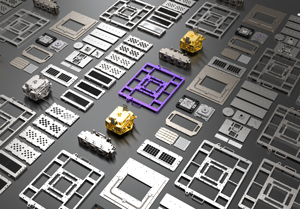
 The company worked with its suppliers to develop a material carrying its own trademark, designed to address the customer’s requirements. The project required close evaluation. KA Group spent close to six months working with the customer, reviewing data, establishing the justification and obtaining management approval before the solution was launched.
The result was the customer gaining a solution to their cost and quality challenges. Management describes the project as a win-win.
Proprietary Technologies for Increasingly Demanding Test Environments
KA Group’s integrated structure strengthens its capabilities across wafer test, final test and advanced test. Thermal behavior can affect test performance, higher frequencies place new demands on interconnections, and new packaging approaches introduce different mechanical and handling requirements.
The company’s proprietary technologies provide another part of that capability. KAL® ESD safe surface treatments help protect sensitive devices from electrostatic damage during handling and testing. TKA® Engineering Plastics combine controlled electrical characteristics with dimensional stability and thermal resistance. KOLD® thermal management solutions are designed to maintain reliable handling performance across extreme temperature ranges.
These technologies are also informed by what KA Group’s engineers encounter in the field. Recurring failure patterns observed at customer sites can feed back into the innovation pipeline and become new proprietary materials or engineered solutions. This creates a direct connection between field experience and the development of technologies designed around real production requirements.
Engineering for the Next Generation of Devices
A second example highlights the engineering demands emerging in high-performance computing. KA Group describes an engagement involving a high-power AI device with multiple stacked dies that heated unevenly under load. Conventional cooling approaches could not maintain the stable, uniform temperature required for reliable testing.
KA Group co-designed an active thermal control solution with fast-response direct module cooling and validated it on the customer’s production line under real operating conditions. The result was stable, repeatable testing, fewer false rejects, more consistent results and a faster path from qualification to volume production.
-
We believe semiconductor test is becoming one of the industry’s most important strategic capabilities. The industry’s next bottleneck may not be manufacturing capacity, but validation capacity.
The same co-development model is now being applied to increasingly complex test applications, where multiple performance requirements must be validated together.
These examples show how application-specific engineering can address challenges that conventional approaches cannot easily resolve, while helping advanced devices move more efficiently towards production.
Why Relationships Matter
Technology is only part of KA Group’s proposition. Management also points to trust, proven solutions, early engagement and timely service as important reasons customers continue to work with the company.
Customers increasingly engage KA Group during the early stages of development, when problems can be addressed before they become larger production constraints. Those relationships are built over years, giving customers confidence in KA Group’s solutions and its ability to respond when new challenges emerge.
Timely service and proven performance are particularly important as customers move from qualification into volume production. The company’s field service engineers remain involved during this transition, providing continuity as requirements evolve.
Test’s Changing Strategic Role
KA Group believes validation is becoming increasingly important as AI and advanced computing create new challenges in performance, thermal management and device reliability.
 “We believe semiconductor test is becoming one of the industry’s most important strategic capabilities. The industry’s next bottleneck may not be manufacturing capacity, but validation capacity,” says Mr. Low Fatt Chye, Chief Executive Officer.
As semiconductor development accelerates, increasingly complex technologies must be proven before they can reach production. For KA Group, this creates an opportunity to engage with customers earlier, when problems are being defined and solutions are being developed.
“Test has moved much earlier in the product lifecycle. It has become a strategic consideration, not an afterthought,” says Mr. KK. Lam.
That perspective changes the role of testing from a final validation step into a capability that can influence design decisions, accelerate qualification and support the transition from development to scalable production.
KA Group’s integrated portfolio enables it to support customers from first silicon through high volume production, while its proprietary materials and thermal technologies address some of the most demanding test challenges in the industry.
Investing in What Comes Next
KA Group is continuing to invest in the capabilities it believes will be needed for the next phase of semiconductor development. Its Singapore Innovation Center is focused on proprietary technology development and increasingly on co-innovation, bringing customers and partners into joint design discussions and technology roadmaps.
The company is also expanding its presence globally, to work more closely with customers as new technologies move from development into qualification and production.
Investment priorities include advanced thermal management, with ATC systems and tri-temperature solutions among the areas being developed, as well as high-frequency and IO-dense applications, next-generation interconnects and specialty materials for demanding test environments.
The company is also strengthening automation, machining, surface treatment capabilities and additive manufacturing to support increasingly complex requirements.
Management specifically identifies thermal management, interconnection and advanced packaging as areas where the industry’s continuing evolution will create new requirements and opportunities for KA Group to develop solutions.
Turning Challenges Into Opportunities
The semiconductor industry’s increasing complexity is creating problems that require more than standard answers. KA Group’s combination of engineering expertise, proprietary technologies, innovation and customer collaboration gives it a platform to address those challenges across the test lifecycle.
Its focus is increasingly on helping customers navigate the difficult transition from emerging technology to reliable, scalable production. That means addressing thermal, interconnection, packaging and validation challenges while maintaining the reliability and consistency required at volume.
“The test challenges we face today are becoming more significant as AI and advanced computing drive greater device complexity. We remain committed to advancing test technologies and helping our customers bring innovative products to market faster, with uncompromising quality and reliability,” says Mr. Low Fatt Chye.
For KA Group, the opportunity is to keep pace with semiconductor complexity, and help customers overcome the test challenges that complexity creates. It is this combination of engineering capability, proprietary innovation and long-standing customer relationships that underpins KA Group’s recognition as Top Semiconductor Testing Solutions in Asia 2026.
Engineering Semiconductor Test for Complex Devices
Semiconductor test is being pulled in two directions. Advanced packages are becoming denser, while some high-power devices are getting larger and generating more heat. Test hardware has to deal with tighter contact geometry and heavier thermal loads at the same time. For buyers, the question is no longer simply whether a fixture can make contact. It is whether the setup can maintain consistent results as package formats change, power levels increase, interconnects become denser and qualification windows get shorter.
Accuracy has to hold when conditions change. Mechanical alignment and signal behavior can shift as temperatures move, leading to false rejects or unstable readings even when the test cell appears to be running normally. Equipment that works well for one package size can become a limitation as pin counts increase or thermal gradients become harder to manage. Hardware needs to suit the device and its process window, rather than forcing a changing product into a fixed test format.
Production performance matters just as much as design accuracy. Hardware that runs reliably during development testing may behave differently once cycle rates increase or the handler introduces small variations. Buyers should ask how the supplier checks contact behavior and thermal response, and whether those results have been proven in production. Support during qualification and ramp-up is also important.
The connection between test hardware and the rest of the test cell can cause problems of its own. A component may meet the technical requirements but still hold up a program if it needs workarounds at the handler or cannot handle package changes. These issues are easier to deal with before the purchase order is placed. Early discussions around fit, thermal behavior, contact performance and service requirements can help avoid small mismatches that later turn into recurring production problems.
“KA Group also provides on-site qualification and production support so that design changes can be checked under real manufacturing conditions.”
Materials can create problems that are easy to overlook during testing. An electrostatic discharge event may not cause immediate failure, while repeated heating and cooling can gradually change dimensions and affect handling accuracy. That makes surface treatments and engineering plastics worth considering before a purchase is made. Thermal-contact components also need close attention since their electrical and thermal properties can affect test results over time. Component life matters too. If parts need frequent replacement, maintenance takes longer and consumable costs can quickly add up.
The right supplier should be able to follow a customer's device roadmap instead of treating each new package as a completely separate project. That requires early engineering input, manufacturing experience and a feedback loop between what happens in the field and what gets changed in the design. For buyers, that flexibility can be more valuable than a large catalogue that offers little room for application-specific adjustments.
KA Group follows this approach through application-specific engineering for wafer probe and final test, backed by specialty materials and thermal-control technologies. Its portfolio covers probe heads, test sockets, change kits and Active Thermal Control systems. KAL and TKA are designed for ESD-sensitive handling and material stability, while KOLD addresses temperature-dependent handling. KnightAuto also provides on-site qualification and production support so that design changes can be checked under real manufacturing conditions. This gives manufacturers an option when more complex devices no longer fit standard test hardware.
...Read more
| Share this Article:Tweet
|
Company
KA Group
Management
Mr. Low Fatt Chye, Chief Executive Officer, Mr. KK. Lam, Chief Commercial Officer and Mr. Teo Chee Wee, Chief Financial Officer and Chief Strategy Officer
Description
KA Group delivers advanced semiconductor test solutions spanning wafer, final and advanced testing. Through application-specific engineering, proprietary technologies and customer collaboration, it helps semiconductor manufacturers address complex thermal, interconnect and packaging challenges while improving reliability, yield and production scalability.
This content is copyright protected
However, if you would like to share the information in this article, you may use the link below: