
SEMICONDUCTOR REVIEW THANK YOU FOR SUBSCRIBING
× 
Semi Conductor Review Weekly Brief
Be first to read the latest tech news, Industry Leader's Insights, and CIO interviews of medium and large enterprises exclusively from Semi Conductor Review
This article is part of Semiconductor Review Innovation Insights series featuring expert contributions nominated by our subscribers and reviewed by our editorial team in Fort Lauderdale, FL.
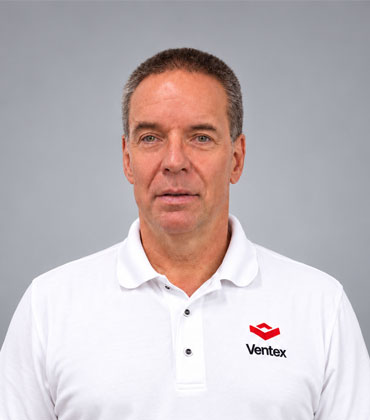
Ventex Corporation
As semiconductor manufacturers balance capacity expansion, equipment lead times, capital discipline and supply-chain resilience, mature-node manufacturing is taking on renewed strategic importance. Ahead of SEMICON West 2026 in San Francisco, this perspective examines the evolving lithography equipment market and why engineering expertise, documented refurbishment and lifecycle support are increasingly important considerations for fabs.
Mature Nodes Are Becoming Strategic Again
As the semiconductor industry gathers in San Francisco for SEMICON West 2026, much of the conversation will understandably center on AI, advanced manufacturing and technologies enabling the next generation of computing.
But an equally important story is developing further back in the technology roadmap.
Mature-node manufacturing remains fundamental to automotive electronics, industrial systems, data-center power semiconductors, analog devices, MEMS, sensors, RF and IoT. These applications do not necessarily require leading-edge lithography. They require dependable capacity, attractive cost of ownership and equipment capable of producing reliably for years.
That is creating renewed strategic value for proven i-line and KrF lithography platforms.
According to SEMI’s 200mm Fab Outlook, global installed 200mm capacity is projected to reach approximately 7.7 million wafers per month in 2026, while 200mm fab equipment spending is expected to increase 10 percent year over year to $7.7 billion. Drivers include sustained mature-node demand, power semiconductors, MEMS, analog ICs and supply-chain diversification.
The message is clear, mature-node manufacturing is not disappearing. It is evolving.
A Second Life for Proven Lithography Platforms
The continuing relevance of i-line and KrF systems demonstrates that established optical lithography platforms still occupy an important position in the manufacturing ecosystem.
For manufacturers, however, the challenge is not simply finding a used stepper. It is determining whether that equipment can become a dependable production asset.
Two systems with the same model designation can represent dramatically different values depending on maintenance history, optics degradation, stages, electronics, software configuration, calibration, storage conditions and previous production use.
This is why generalized online equipment buying guides and published price ranges should not substitute for physical inspection, in-depth engineering evaluation and market knowledge.
At Ventex, we believe the relevant question is not simply, “What does this equipment model cost?” It is, “What production capability, stability and long-term support am I receiving for that investment?”
Refurbishment Is an Engineering Discipline
A semiconductor lithography tool cannot be evaluated like conventional used industrial machinery. Just as importantly, “used” and “refurbished” should not be treated as interchangeable terms.
At Ventex, refurbishment means what you think it does, restoring a system to as-new or, where upgrades allow better-than-original performance and capability. Our process can incorporate the latest available upgrades and systems, including user interfaces to standard optics and optical filters, XY and tilt stages, robots, lasers, masking blades, shutters, panels and color-monitor upgrades. Every refurbished system is comprehensively tested to the customer’s specifications, delivered and installed at your facility and backed by a full warranty.
-
Every refurbished system is comprehensively tested to the customer’s specifications, delivered and installed at your facility and backed by a full warranty.
This capability is built on more than 32 years of lithography equipment experience, supported by skilled and rigorously trained engineers and a substantial inventory of OEM core tools and OEM and Ventex replacement parts. Because critical equipment and components are already in inventory, Ventex can configure and remanufacture a system to customer requirements in as little as 12 weeks, an important advantage when equipment lead time can directly affect fab capacity plans.
A lower-cost tool can quickly become expensive if replacement components, troubleshooting expertise or calibration capabilities are unavailable. A professionally refurbished system, fully tested and backed by warranty, parts availability and experienced engineering support, presents a fundamentally different risk profile.
Four Trends Reshaping Mature-Node Lithography
Several trends are reinforcing this shift.
First, 200mm manufacturing remains economically attractive. Power devices, analog ICs, MEMS, sensors and specialty semiconductors benefit from the economics and process maturity of established fabs.
Second, AI is indirectly increasing mature-node demand. AI infrastructure requires far more than leading-edge processors. Data centers also require power-management ICs, connectivity devices, controllers and other supporting semiconductors.
Third, specialty substrates and power electronics are expanding equipment requirements. Silicon carbide, compound semiconductors and other specialized applications create opportunities for flexible lithography platforms supporting different wafer and substrate configurations.
Finally, capital efficiency and speed to production are becoming as important as capital expansion. Not every additional wafer of capacity requires a new tool or the associated lead time. For the appropriate process, professionally refurbished equipment can offer an attractive combination of shorter lead times, lower capital expenditure and proven process capability.
From Used Equipment to Strategic Manufacturing Assets
There is also a sustainability dimension. Extending the productive life of sophisticated semiconductor equipment is circularity in practical form. A lithography system represents precision optics, motion-control systems, electronics and significant embedded manufacturing investment. Professionally restoring that equipment to productive service preserves both financial and physical resources.
The next generation of semiconductor manufacturing will unquestionably require extraordinary new equipment. But the industry must also become better at extracting value from the extraordinary equipment it already has.
As SEMICON West brings the semiconductor community together in San Francisco, our perspective at Ventex is straightforward.
Buy capability and stability, not simply a model number. Evaluate condition, engineering expertise, parts availability, warranty and long-term support alongside acquisition price.
For mature-node manufacturing, the most valuable equipment may not always be the newest. It is the equipment that delivers the right process capability, reliability and economics and continues doing so for years to come.
MORE FROM Innovation Insights
Viola Kirk, Campaign Manager
ALLTEC Angewandte Laserlicht Technologie GmbH
Industrial Direct Part Marking: How Process Selection Impacts Overall Production
PhD (B.A.) Hiromune ISHII, President and Representative Director
Sanshin Electric
Addressing Three Timeless Challenges of AC-DC Transformers: Thermal, Noise and Size

Eran Belaish, Director of Product Marketing, TestInsight
TestInsight
Early Test Program Validation Using a Virtual ATE
EXPLORE OUR KNOWLEDGE NETWORK
The articles and profiles featured here are based on contributions from industry leaders and editorial research. They reflect the views and expertise of the individuals and organizations featured, as reviewed by our editorial team.
This content is copyright protected
However, if you would like to share the information in this article, you may use the link below: