


Thank you for Subscribing to Semiconductor Review Weekly Brief
× 
Semi Conductor Review Weekly Brief
Be first to read the latest tech news, Industry Leader's Insights, and CIO interviews of medium and large enterprises exclusively from Semi Conductor Review
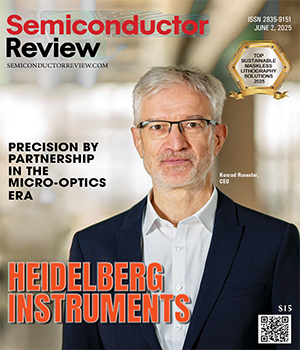
Heidelberg Instruments has been recognized by Semiconductor Review Magazine as “Top Sustainable Maskless Lithography Solutions - 2025” based on our proprietary methodology, reflecting its position in the industry. This profile has been developed by the Semiconductor Review research and editorial team based on insights from an interview with Konrad Roessler, CEO .


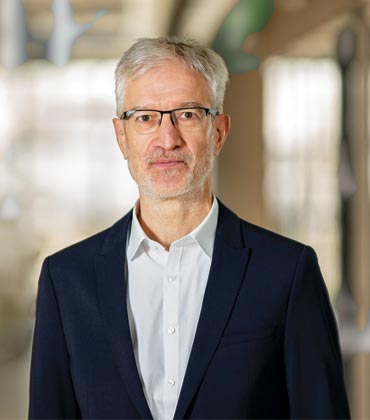 Konrad Roessler, CEO
 Heidelberg Instruments, a global leader in high-precision laser lithography systems, has spent four decades building not just tools but trust—positioning itself as an essential enabler in the field of micro- and nanotechnology.
The company’s story is one of both precision and empathy. It represents a rare blend of technical excellence and a humancentered philosophy that begins with a single premise: seeing the world through the eyes of the customer.
“We think seeing everything from the perspective of our customers is perhaps more meaningful than just seeing it through the lens of lithography,” says Konrad Roessler, CEO. “Customers come to us with specific needs, often in highly specialized applications, and we don't just hand them a tool. We partner with them to find a way to meet those goals.”
This philosophy has not only guided product development but has also shaped the company culture, setting Heidelberg Instruments apart in a market that often leans toward transactional exchanges rather than long-term collaboration.
Building a Legacy in Laser Lithography
Founded more than 40 years ago, Heidelberg Instruments has its roots in Germany’s famed university city of Heidelberg.
What started as a vision by a group of engineers and scientists has now become a global enterprise, offering an extensive and diverse portfolio of maskless lithography tools. These systems enable direct writing on substrates, eliminating the need for traditional photomasks. But more than that, they allow researchers and industrial users to iterate faster, reduce waste, and push the boundaries of what’s possible in semiconductor, MEMS, micro-optics, and nanotechnology applications.
The company’s focus on research and development has led to a broad spectrum of offerings unmatched in their versatility.
“One consequence of our partnership approach is that we have a very wide product portfolio,” Roessler explains. “We offer tools suitable for many different tasks in direct-write lithography. Over the years, we've collected a vast pool of knowledge that directly benefits our customers.”
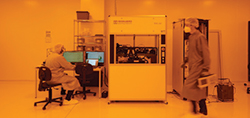 The sheer diversity of customer needs—from tiny, delicate substrates to large, oddly shaped ones—has helped Heidelberg Instruments fine-tune its machinery to handle a wide variety of requirements without veering too far into costly customization.
“We’re not a job shop for one-offs,” says Roessler. “But our tools are versatile enough to be adapted through a broad set of options to meet most challenges.”
The Maskless Edge
At the heart of Heidelberg Instruments’ technological edge is the maskless lithography process. Traditional lithography involves creating a photomask that defines the pattern, which is then projected onto the substrate using an aligner or stepper. This process can be time-consuming, resource-intensive, and rigid—particularly ill-suited for research environments where flexibility and speed are paramount.
"We think seeing everything from the perspective of our customers is perhaps more meaningful than just seeing it through the lens of lithography"
Heidelberg Instruments’ approach does away with the mask entirely. Its maskless lithography tools write patterns directly onto the final substrate, significantly reducing time, cost, and energy consumption. This direct-write method also makes it easier to iterate designs, tweak individual layers, and keep pace with rapidly evolving R&D demands.
The sustainability aspect of this method cannot be overstated. With the direct-write approach, customers don’t need to order and wait for photomasks—saving time and money while also significantly cutting down on energy consumption and waste.
Sustainability extends beyond just process efficiencies. In recent years, Heidelberg Instruments has optimized its tools to further reduce consumables. The lasers used in their systems now have lifespans that match that of the entire tool, eliminating the need for regular replacements and significantly lowering the total cost of ownership. It’s a win-win: fewer components to replace and maintain, and a greener footprint for customers increasingly mindful of their environmental impact.
Solutions in Action: From Research to Industry
The company’s customer-centric ethos is perhaps best illustrated through the success stories of its clients.
One such example is a university in Germany conducting advanced research in calorimetry—a field that involves measuring energy released by particles, crucial for applications in particle physics and astronomy. These sensors often require up to twenty complex layers, each carefully aligned with the last. Before turning to Heidelberg Instruments, the university relied on traditional photomasks, which made iterative development painfully slow and expensive.
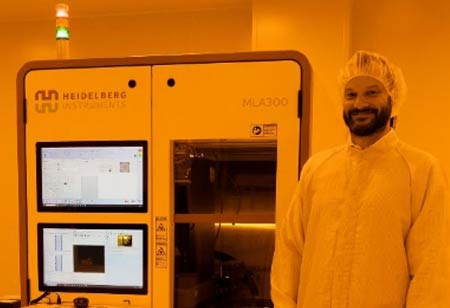
Enter the MLA 150, one of Heidelberg Instruments’ flagship maskless systems. With this direct-write tool, researchers could suddenly iterate within weeks rather than months. They could fine-tune individual layers, adjust patterns midstream, and move their research forward without the friction of ordering new masks for every modification.
-
We offer tools suitable for many different tasks in direct-write lithography. Over the years, we've collected a vast pool of knowledge that directly benefits our customers
Another case comes from the industrial sector, where a client was producing temperature sensors on very thin, uneven substrates. Traditional aligners struggled to maintain focus across the entire surface, leading to poor yields and significant waste. With Heidelberg’s maskless tools—equipped with real-time autofocus technology—the company was able to maintain bestfocus exposure across the substrate, improving sensor yield by approximately 50 percent.
“That kind of improvement is transformative,” says Roessler. “And it simply wasn’t possible with older mask-based systems.”
Powered by People
Technology alone does not make a company successful. For Heidelberg Instruments, the real differentiator lies in its people. From the early days of startup energy to its current position as a market leader, the company has maintained a flat organizational structure that encourages collaboration and open dialogue. This, Roessler says, is key to navigating the fast-paced world of micro-optics and nanotechnology.
“We’re fortunate to be in a region rich in academic talent,” he says, referring to Heidelberg’s proximity to Heidelberg University and the Karlsruhe Institute of Technology. “We attract highly skilled engineers and scientists who are passionate about what they do. And because we’re vertically integrated—from R&D to manufacturing to marketing—they get to see their ideas come to life. That’s incredibly fulfilling.”
By combining the experience of seasoned professionals with the fresh perspectives of younger hires, the company has fostered an environment that encourages innovation while honoring its legacy.
Listening and Leading
Perhaps what most defines Heidelberg Instruments’ approach is its willingness to listen. The company’s Process Application Lab serves as a hub where new applications and technologies are prototyped in close cooperation with clients.
“We try things out. If something has promise, we refine it and build it into our product lineup. If not, we move on. But we always keep that channel open,” mentions Roessler.
This responsiveness has led to several industry firsts. The company developed the first tabletop lithography system in response to demand from smaller research labs. Later, when customers required photomasks far larger than the industry standard, Heidelberg Instruments rose to the challenge and built a tool capable of handling 800 mm masks—a benchmark that served display manufacturers for years.
And while the company now offers maskless tools that in many cases replace the need for photomasks, it continues to support and innovate in the mask-writing space as well. “It may sound strange,” Roessler admits with a smile, “but we also build the photomask writers that our own tools are sometimes used to replace.” It’s this balance—between innovation and tradition, between moving forward and honoring existing processes—that underscores the company’s maturity and vision.
Precision, Reimagined
Looking toward the future, Heidelberg Instruments sees significant opportunities for growth, particularly in industrial markets. Its tools are increasingly being used in small-series production, especially in applications where features fall below the five-micron range. These include advanced packaging, probe cards, micromechanics, and a host of MEMS-based products. While mass production still leans heavily on photomasks and steppers, smaller-volume applications are becoming more frequent—and more complex—creating ideal conditions for maskless lithography tools to shine.
Additionally, as part of the LAB14 group, Heidelberg Instruments is now able to collaborate more closely with sister companies specializing in inkjet technologies, surface analysis, and other complementary areas.
“We’re working on offering full process solutions,” Roessler says, “bundling systems and services in a way that adds even more value for our customers.”
Whether in research or industry, what Heidelberg Instruments offers is more than a tool. It’s a process, a partnership, and a promise to evolve alongside its customers.
After 40 years, Heidelberg Instruments remains at the forefront not because it has all the answers, but because it keeps asking the right questions: What do our customers need? How can we help them succeed? What challenges do they face, and how can we adapt to meet them?
The answers are etched not just in silicon, but in the relationships they’ve built, the processes they’ve streamlined, and the ideas they’ve helped bring to life. In the rapidly advancing field of micro-optics and nanotechnology, Heidelberg Instruments continues to prove that the best technology comes not from the lab alone, but from listening—to customers, to markets, and to one another.
| Share this Article:Tweet
|
Company
Heidelberg Instruments
Management
Konrad Roessler, CEO
Description
Heidelberg Instruments, a global leader in high-precision laser lithography and maskless aligners, has been innovating in micro and nanotechnology for over 40 years. By partnering closely with clients, the company delivers tailored solutions that range from industrial-grade photomask equipment to R&D tools.
This content is copyright protected
However, if you would like to share the information in this article, you may use the link below: