
SEMICONDUCTOR REVIEW THANK YOU FOR SUBSCRIBING
× 
Semi Conductor Review Weekly Brief
Be first to read the latest tech news, Industry Leader's Insights, and CIO interviews of medium and large enterprises exclusively from Semi Conductor Review
Semiconductor Review: Specials Magazine
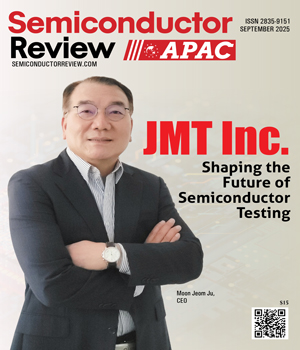
Established in 1988 and based in Hidaka City, Saitama, Japan, JMT Inc.. has carved out a strong reputation in the semiconductor testing sector. The company specializes in manufacturing test sockets and sheets, with a particular focus on the use of silicone rubber materials. These components play a crucial role in the post-assembly phase of semiconductor devices, where they are used to assess the performance and durability of chips. At the core of JMT’s success is its ability to create highly customizable solutions for its clients. The company’s deep knowledge of silicone rubber allows it to produce components that deliver reliable performance even in the harshest testing environments, such as extreme temperatures. This ability to adapt and meet clients’ specific needs has made JMT a trusted partner for some of the world’s leading semiconductor companies, including Samsung, SK Hynix, and Micron. Offering Strong Balance of Cost Efficiency and Reliability JMT’s flagship product, the pressure-type conductive contact sheet PCR®, is a sheet-type contactor made primarily from silicone rubber. The use of silicone rubber enables stable electrical connections without damaging IC packages or test boards, making it well-suited for repeated use. PCR® offers a strong balance of cost efficiency and reliability, making it ideal for testing a wide range of semiconductor package types. PCR® features a unique internal structure in which conductive particles are aligned vertically through the thickness of the sheet. When pressure is applied to the electrode area containing these particles, they come into contact with one another, forming multiple current paths. This structure ensures stable electrical properties and enables accurate, reliable measurements. Additionally, PCR® utilizes a planar contact structure, which provides a wide tolerance range for positional errors and can flexibly accommodate minor misalignments. Its ability to connect over very short distances also makes it ideal for testing high-end products that require high-frequency performance. High-performance test sockets that incorporate the PCR® sheet-type contactor support a wide range of applications—from fine-pitch, small ICs to large, advanced packages. The simple structure of PCR® enables easy maintenance and user-friendly handling. Moreover, the socket’s pressureapplication mechanism can be customized to match each customer’s product specifications and testing environment, with structural options including clamshell, double-latch, and screw-fixed types. Taking a Customer-First Approac JMT’s commitment to customer satisfaction is another cornerstone of its business. The company goes beyond simply selling products; it listens carefully to its clients’ needs and tailors its solutions to meet them.
Top Semiconductor Decontamination Service in Asia 2025
In semiconductor fabs operating 24/7, precision isn’t just machine-driven—it depends on the people who maintain controlled conditions. If cleanroom garments fail to meet strict standards or contamination protocols falter, production suffers. With decades of expertise in cleanroom industries—particularly semiconductors—Elis Cleanroom, your contamination control partner, offers tailored rental solutions covering stock, sterilization, delivery, maintenance, management and replacement. In 2024, Elis Cleanroom expanded to Asia through the acquisition of Wonway in Malaysia. Since 1984, Wonway (now part of Elis Cleanroom) has specialized in minimizing production risks, delivering ISO/IEC 17025-tested contamination and electrostatic discharge (ESD) control solutions to highly regulated sectors such as semiconductors, wafer fabrication, healthcare, optics, precision engineering and food production. What sets Wonway (Elis Cleanroom) apart is its ability to customize solutions without compromising compliance. Its team combines deep technical knowledge with real-world cleanroom operations, aligning services with recognized industry standards to strengthen customers’ contamination control strategies. “Our quality management system provides the framework for consistency and control, but it’s the engagement and responsibility of our people that drive true service excellence. They know their work directly impacts clients’ performance and compliance,” says Lok Chong, Managing Director, Wonway (Elis Cleanroom). Elis Group’s central teams in Quality, Methods, IT and Compliance reinforce Wonway’s (Elis Cleanroom) infrastructure while allowing it to remain agile and locally responsive. This global expertise also enhances the ability to deliver tailored cleanroom garment rental solutions. The choice to lease rather than purchase is increasingly driven by the advantages of Elis’ end-to-end service model. Unlike traditional purchase models, the one-stop leasing solution covers the entire garment lifecycle—from inventory management, distribution, cleaning and testing, to data-driven insights and trend analysis. In Malaysia, Wonway (Elis Cleanroom) also designs and manufactures cleanroom garments and footwear in-house, ensuring every product is purpose-built and aligned with sector-specific requirements.

CXO INSIGHTS

Recruitment Challenges in the HighTech Packaging World
August Miller, Director, R&D Design Center and Daniella Olson, Staff Engineer, Amkor Technology, Inc

Connecting Dots
Kevin Anderson, Director Integration Technology Research, Qorvo, Inc

Unlocking the true value of Data - Lessons from the journey
Adarsha Marpalli, Sr Director- Global Head Data and Insights, Nexperia

A Paradigm Shift: Leveraging Artificial Intelligence and Machine Learning in Design Engineering
Matthew Yap, Associate Director, Microchip Technology Inc

Is Design Reuse a Myth For Analog Circuits?
Eric Young, Senior Analog IC Design Manager, Monolithic Power Systems [NASDAQ: MPWR]

Balancing Cost Lead Time and Quality Daily
Jill Wrucha-Munter, Commodity Manager-Electronic components, Fluke Corporation

Shaping the Next Generation of AI at the Edge
Mandali Khalesi, Vice President AI Platform & Technology, Renesas Electronics


IN FOCUS
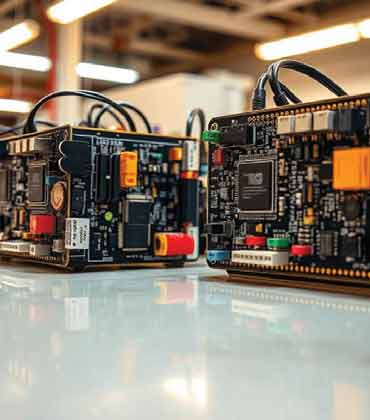
APAC Semiconductor Testing: Key Drivers and Trends Shaping the Industry
Semiconductor testing solutions in the APAC region ensure performance, reliability, and yield in advanced chips, driving innovation across the AI, automotive, 5G, and IoT sectors under evolving technology standards.
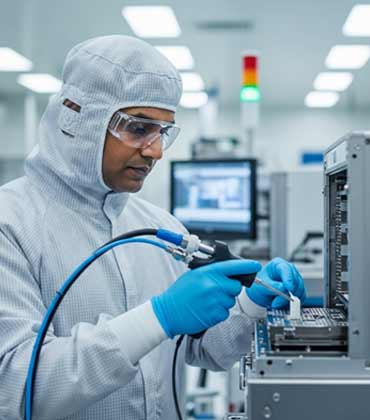
Decontamination Services in APAC: Advancing Semiconductor Integrity and Sustainability
Semiconductor decontamination is crucial for maintaining cleanroom integrity in APAC, enhancing product quality, ensuring compliance, optimizing equipment lifespan, and promoting sustainability in the competitive semiconductor.
EDITORIAL
Future of Semiconductor Testing and Decontamination Excellence
The semiconductor industry is at the heart of digital innovation. As chips become more powerful and complex, testing and contamination control evolve rapidly.
The latest trend is the adoption of AI-driven adaptive testing platforms that dynamically adjust test parameters, reducing test time and improving yield without compromising reliability. This trend reflects the industry’s push to keep pace with next-generation chip architectures, from 3D packaging to heterogeneous integration.
More advancement is underway. Cloud-based test data management platforms are centralizing and analyzing test data across global fabrications. Companies are accelerating yield learning cycles and improving collaboration between design, test and manufacturing teams.
Semiconductor decontamination services are also gaining momentum with the shift toward ultra-clean manufacturing environments. The use of robotic cleaning systems, advanced plasma decontamination and eco-friendly solvents is redefining how fabs maintain purity standards. These innovations are minimizing particle contamination at the nanoscale while ensuring cleaner production lines.
The industry is moving toward real-time contamination monitoring. Advanced IoT sensors embedded in cleanrooms can now detect particle anomalies at the source, triggering automated cleaning protocols to prevent costly downtime.
This edition of Semiconductor Review APAC brings recent developments and expert insights in the semiconductor testing and decontamination service arena.
It features thought leadership articles from industry experts, including Eric Young, senior analog IC design manager at Monolithic Power Systems, Inc., who breaks down the myth of one-time use of circuits in chips and discusses strategies for reusing analog circuits. Russell Dover, general manager, service product line at Lam Research Corp., shares insights into how innovations in virtual sensors used in semiconductors are driving higher productivity in large-scale chip production.
We hope this edition delivers the insights you need to stay ahead of the latest trends in semiconductor testing and decontamination and helps you zero in on the right partner your organization needs to sharpen its competitive edge in the semiconductor industry.
This content is copyright protected
However, if you would like to share the information in this article, you may use the link below:
https://www.semiconductorreview.com/edition/september-2025-23.html