
SEMICONDUCTOR REVIEW THANK YOU FOR SUBSCRIBING
× 
Semi Conductor Review Weekly Brief
Be first to read the latest tech news, Industry Leader's Insights, and CIO interviews of medium and large enterprises exclusively from Semi Conductor Review
Semiconductor Review: Specials Magazine
As the speed and complexity of the smart devices and computers we use have continued to grow exponentially, so has the complexity of the microchips that enable them. This has placed increased pressure on semiconductor OEMs to deliver higher performance and reliability in their equipment. Although rising demand for microchips has made it necessary for semiconductor capital equipment manufacturers to expand production, building, shipping, installing, and commissioning new manufacturing lines capable of meeting modern precision requirements is technically challenging, time-consuming, and expensive. These lines are also often dependent on slow and inefficient supply chains, making them vulnerable to unanticipated issues that can extend product development cycles and result in lead times as long as six to nine months for additional tooling. It’s well known that the effectiveness of semiconductor manufacturing equipment can be impacted by disturbances at the nanometer scale and by temperature fluctuations in the millikelvin (mK) range. However, the constraints of traditional manufacturing techniques, such as casting or precision machining, make it difficult to design and produce functionally ideal parts with enough accuracy and durability to optimize performance. This can result in equipment with excess weight or volume that makes it prone to vibrations, leakage, pressure drops or other failures. Semiconductor capital equipment manufacturers incorporating metal additive manufacturing (AM) into their manufacturing processes can improve imaging performance, yield, quality, accuracy, productivity and reliability.

Top LCR and ESR Multimeters Manufacturer in Canada 2025
Siborg Systems is a trusted provider of engineering hardware and software solutions for the semiconductor and electronics industries. As an integral part of a globally recognized high-tech community, the company brings over 50 years of expertise in computational physics, more than 42 years of experience in semiconductor device modeling, and 20 years in high-precision electronic measurements. Its primary offerings include highly accurate digital multimeters, with the flagship product line being the LCR-Reader series, renowned for precision and efficiency in component testing and measurement. “Our goal has always been to make precision testing tools accessible, efficient, and intuitive for engineers and technicians worldwide. With each generation of the LCR-Reader, we push the boundaries of compact design and measurement accuracy without compromising ease of use,” says Michael Obrecht, Director. At the forefront of Siborg’s product lineup is the LCR-Reader-MPA, which offers an extensive measurement range and includes an oscilloscope mode capable of waveform analysis up to 100 kHz. The LCR-Reader R1 is the entry-level model, ideal for quick, automatic LCR/ESR measurements with 0.5 percent basic accuracy. For users who require enhanced functionality and higher precision, the LCR-Reader R2 offers 0.1 percent accuracy, test frequencies up to 250 kHz, and advanced features such as Analog Signature Analysis, LED and RDC testing, dual signal source resistance, and signal generation. The newest addition, the LCR-Reader R3, retains the capabilities of the R2 while adding a multilingual interface and a 100 kHz test frequency, improving usability and accessibility for international users. A major innovation in the LCR-Reader series is Bluetooth integration, which brings convenience and efficiency to the forefront. This feature allows users to define Pass/Fail criteria and receive immediate results on a connected PC. With easy data export through a dedicated dongle and software, it is particularly useful for professionals in quality control and those who rely on consistent data logging. The latest version of the LCR-Reader Data Logger enhances this functionality by allowing users to import Bills of Materials (BOMs) and PCB images. It enables on-screen selection of components, significantly accelerating the testing process with sub-second evaluation times. Each LCR-Reader model integrates precision tweezers with a lightweight multimeter. When a component is placed between the gold-plated tips, the device automatically identifies the component type and selects the optimal test parameters. Key results such as component type, test mode, frequency, and ESR are immediately displayed on the device’s built-in screen. For applications that demand even greater accuracy, particularly when measuring ultra-small components, Siborg has developed proprietary Open and Short Calibration Boards (patent pending). Designed to work with the LCR-Reader MPA, R2, and R3 models, these boards enable precise measurement of capacitance below 1 pF and inductance below 10 nH. This innovation eliminates the need for costly benchtop instruments, making advanced testing faster, more reliable, and significantly more affordable.

CXO INSIGHTS

Evolving Manufacturing: The Strategic Role of Industrial Fastener Distribution
Blake Ritter, Branded Products Segment Manager, Lincoln Industries

Going Green: The Benefits and Challenges of Paperless Manufacturing Systems
Jose I. Perez Alvarado, Director of Operations and Industrial Engineering, PFC. Toronto, OSI Systems

Driving Safety Through Secure Infotainment Systems
Jason Brown, Information Technology Security Manager, the Shyft Group

Accelerating Innovation, Impact and Leadership in Automotive
Hiba Yazbeck, Head of Finance and Accounting, MAHLE

Strategic Leadership in Marketing Growth
Katherine Ellwein, Assistant Vice President Marketing, Amerit Fleet Solutions

Transformative Technology: Shaping the Future of Logistics & Shipping
Adam Van Asten, Director - Direct Material Procurement, Clarios, LLC

Securing the Future: Leading Through Complexity and Change
Jeremy Thompson, Senior Director of Security, Highline Warren

Security in the Age of AI
Reynaldo G., Principal Cybersecurity Architect, Cummins Inc

Aiming for an Energy-efficient World
Trent Randles, Engineering Manager, BorgWarner


IN FOCUS
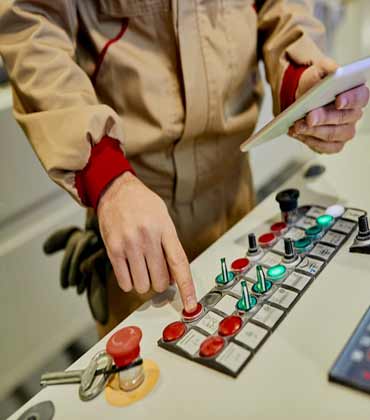
LCR and ESR Multimeters: Key Tools for Maintaining Quality in Canadian Electronics
LCR and ESR multimeters guarantee component quality, reduce defects, and foster adherence to industry standards in electronics manufacturing.
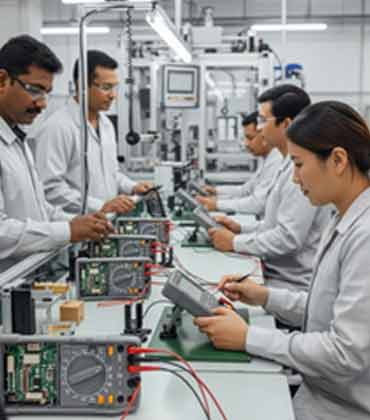
Canada's Commitment to Quality: Innovations in LCR and ESR Multimeter Manufacturing
Canada's LCR and ESR multimeter manufacturing evolves through innovation, smart features, and addressing operational challenges for diverse electronic applications.
EDITORIAL
Powering Innovation in Next-Gen Semiconductor Measurement
The global semiconductor test and measurement equipment market is experiencing remarkable growth, propelled by rapid advancements in electronics and IoT devices. For LCR (inductance, capacitance and resistance) and equivalent series resistance (ESR) multimeter manufacturers, this momentum reflects both booming demand and a technological shift toward smarter, more efficient instrumentation.
Key industry trends are steering this evolution in semiconductor parameters measurement. Digital integration and IoT connectivity in measuring devices are redefining measurement workflows, enabling seamless data capture and remote diagnostics across connected ecosystems. AI-driven automation is optimizing calibration, predictive maintenance and error correction, dramatically improving efficiency and throughput. Compact, high-precision designs continue to dominate R&D operations, which address the need for portability without compromising accuracy.
Meanwhile, sustainable material sourcing and energy-efficient production are becoming core focuses as manufacturers align innovation with environmental responsibility. Another defining trend is the rise of edge analytics, where data processing occurs closer to the point of measurement. This is reducing latency, improving real-time decision-making and enhancing system responsiveness across connected environments.
This edition of Semiconductor Review Canada brings recent developments in advanced measurement technology, highlighting how leading manufacturers are leveraging these trends to enhance performance standards, accelerate time-to-market and meet the evolving demands of next-generation electronics.
It features thought leadership articles from industry experts, including Katherine Ellwein, assistant vice president marketing at Amerit Fleet Solutions, who discusses the evolving challenges and opportunities in digital marketing, especially within the fleet services industry. Jason Brown, information technology security manager at The Shyft Group explains the importance of secure firmware updates for modern vehicle infotainment systems.
We hope this edition provides valuable perspectives, forwardlooking insights and actionable ideas that inspire innovation and strategic growth across the semiconductor and electronics manufacturing sectors.
This content is copyright protected
However, if you would like to share the information in this article, you may use the link below:
https://www.semiconductorreview.com/edition/november-2025-28.html