
SEMICONDUCTOR REVIEW THANK YOU FOR SUBSCRIBING
× 
Semi Conductor Review Weekly Brief
Be first to read the latest tech news, Industry Leader's Insights, and CIO interviews of medium and large enterprises exclusively from Semi Conductor Review
Semiconductor Review: Specials Magazine
Founded in 1960, Astrodyne TDI is a custom designer and manufacturer of innovative power solutions for demanding applications worldwide. “We are a world leader in solving the most challenging power-related semiconductor capital equipment problems,” says Christopher Viola, CEO, Astrodyne TDI. “The market today is witnessing a significant increase in the complexity of semiconductor production and continuous demand to raise yield and improve throughputs. So, it becomes essential for capital equipment companies to stay at the forefront of modern semiconductor technology. We help our industry leading clients achieve this.” Astrodyne TDI solutions range from RF filtering and liquid cooling to programmable variable output power supplies. These solutions help increase clients’ flexibility and capability in the design cycle, while enabling them to launch their products to the market quickly. “We’ve recently integrated our power supplies with RF filtering, digital communication, and variable output to deliver a turnkey working solution that our end customers can directly integrate into their tools. This helps clients reduce lead time and costs, using a single solution to solve their problems,” adds Viola.
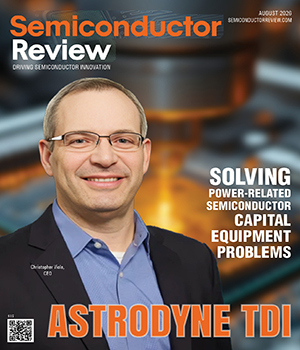
Semiconductor Manufacturing Solutions
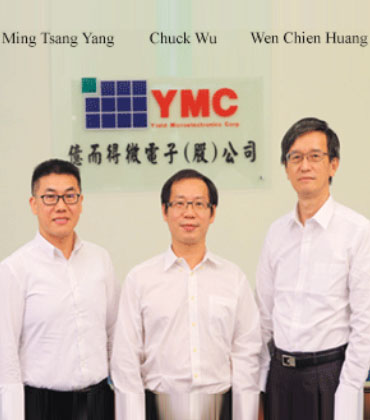
The consumer electronics industry has permeated every aspect of human life with smart TVs, smart homes, smartphones, connected cars, IoT, and AI integrated software and applications. Widely driven by the consumers’ own ever-evolving desire for improved function, their respective electronics space continues to look for technologies that not only capture their imagination but are affordable and relevant to solving day-to-day problems. Taiwan-based Yield Microelectronics Corporation designs specialized embedded logic multiple-time non-volatile memory (NVM) IP, which helps its clients enhance the capabilities of their electronic products according to users’ needs. With its technical expertise and cost-effective solutions, the firm was able to mark its presence in the landscape with a significant market share in the field of logic based multi time programmable (MTP) NVMs. “Leveraging the ‘1 transistor 1 capacitor’ structure of our bit-cell, we build the smallest IP among all MTP vendors, while our competitors are at least 1.5 times bigger,” says Wen Chien Huang, CEO of Yield Microelectronics Corporation (YMC).
The global semiconductor manufacturing industry is thriving thanks to the rising demand for semiconductor devices including CPU, GPU, memory chips, etc. Although the industry is growing at an unprecedented pace, manufacturers face certain challenges in reducing the size of chips to boost processing power, lower energy consumption, and minimize manufacturing costs. Nevertheless, photonics is presenting itself as a promising solution by significantly improving data transmission and processing efficiency, requiring less energy, and reducing manufacturing costs. Leading this transition is Focuslight Technologies Inc., a company develops and manufactures high-power diode laser components and materials, laser optics, and photonic application solutions with a focus in the field of automotive, pan-semiconductor, and medical & health application. Since 2007, the company has been providing customers with high-power photon generation diode laser components and photon control beam shaping micro-optics, significantly advancing the field of photonics. Its primary objective is to be a globally trusted photonics solution provider through innovation, manufacturing excellence, and fast response. "We have recently extended our mission to encompass the development and manufacture of photonic solutions. We are confident that the three main market segments at the core of our business, namely automotive, pan-semiconductors, as well as medical and health, are avenues for success," says Robert Dai, president of Pan-Semiconductor Solutions Business Unit at Focuslight Technologies Inc.
CXO INSIGHTS

How is your New Product Introduction (NPI)Project Going?
Jeff Kaplan, Corporate Director of Manufacturing Engineering, Spartronics

Next-Gen Wireless Trends Every CIO Needs To Know
Dr. Derek Peterson, CTO, Boingo Wireless

3 Lessons on AI
Charles Radclyffe, Head of AI, Fidelity International

Frustrations of a Healthcare CIO
Mark Crandall, CIO, Consulate Health Care

Next-Generation Commercial Data Management Systems For Biopharmaceuticals
Ashwin Athri, SVP, Precision for Value


IN FOCUS
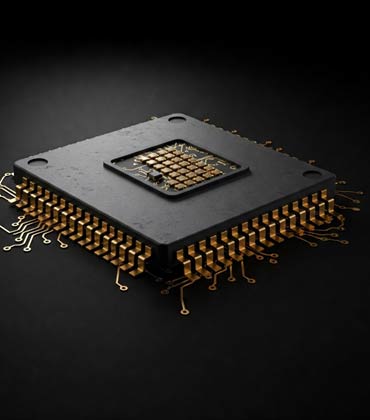
The Essential Role of Semiconductor Chips in Global Progress
Semiconductor chip manufacturing is vital for modern technology, economic growth, and national security. Its precision processes drive innovation and maintain global competitiveness.
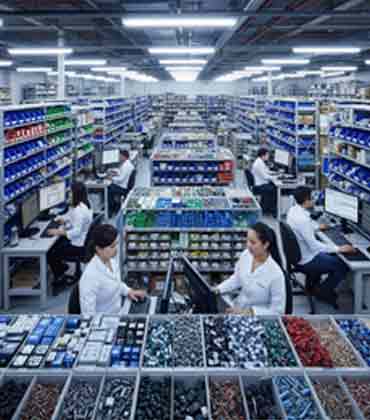
Navigating Challenges in the Electronic Components Supply Chain
Distributors of electronic components face challenges such as supply chain disruptions and competition. To succeed, they should diversify suppliers and embrace innovation.
EDITORIAL
Decoding the Role of Semiconductors in Digital Transformation
Moore’s Law states that the number of transistors on a microchip doubles every two years, though the cost of computers is halved. Gordon Moore, the co-founder of FaircMd Semiconductor and former CEO of Intel, gave the Law when integrated circuit came into mass production, back in the 1960s. Even today, the Law is of some relevance. We still witness the exponential growth in computational speed with each passing year. For example, every few years, there is a new generation of processors available in the market that has a better clock rate. Additionally, the cost to access the computing device, be it a desktop, laptop, or any handheld device, has significantly reduced. This shift in better computational power at a lower price, in the first place, has kick-started the blitz of technologies such as Al, ML, VR, loT, and more that are driving the digital transformation for the organizations.
Speaking about the big picture in the semiconductor supply chain channel, it begins with design and terminates at delivery. In between these two ends, there are various processes and treatments involved that finally result in a silicon chip that will have many use cases. With the growing trend of Al, loT, and big data, the chip can be used in some edge camera device of an autonomous car or inside a mobile phone to support the oncoming SG wave.
Currently, the opportunity to evolve in sync with the disruptive technologies is at the priority for semiconductor solution providers. With the seismic shift, the transformation in the entire semiconductor supply chain channel will result in a better revenue stream while also making the whole process of designing, manufacturing, and delivering will become faster and leaner.
In a nutshell, the semiconductor industry is at the epicenter of digital transformation, where new technological advancement will play a significant role. These, and more, factors will shape the future of the semiconductor industry using increasingly advanced methods to innovate and bring new products in the market. Do let us know your thoughts.
This content is copyright protected
However, if you would like to share the information in this article, you may use the link below:
https://www.semiconductorreview.com/edition/august-2026-35.html