
Thank you for Subscribing to Semiconductor Review Weekly Brief
× 
Semi Conductor Review Weekly Brief
Be first to read the latest tech news, Industry Leader's Insights, and CIO interviews of medium and large enterprises exclusively from Semi Conductor Review
Data Delay Devices has been recognized by Semiconductor Review Magazine as the exclusive recipient of “Top Precision Timing Products Manufacturer 2026,” based on our proprietary methodology, reflecting its position in the industry, and is also named among “Top Semiconductor Manufacturing Services,” reflecting its broader leadership. This profile has been developed by the Semiconductor Review research and editorial team based on insights from an interview with Dr. Victor D Lupi, PhD, VP of Engineering.



Data Delay Devices
Precision Timing in Step with Long-Life Systems

 Dr. Victor D Lupi, PhD, VP of Engineering
The mismatch is most visible in long-life environments such as radar systems, medical imaging equipment and industrial machinery, where platforms are meticulously qualified, installed for extended service lives and expected to perform reliably even as semiconductor processes and product families evolve.
This is where Data Delay Devices’ (DDD) products stand out, successfully bridging that gap between product lifecycles and system lifecycles for more than six decades.
For DDD, the priority is ensuring that this continuity remains seamless and efficient post-qualification. By maintaining stable timing configurations, the company helps clients bypass the costly testing, risks, and operational delays often associated with component updates.
Achieving precise delays is just the beginning. Partnering with DDD gives customers the confidence that their timing functions remain fully supported when older manufacturing processes retire, when standard devices require adaptation or when critical requirements demand a rapid response. Consequently, the company’s true value lies not just in supplying precision components but in helping customers maintain uninterrupted operations in high-stakes environments.
“Continuity is the absolute priority for our partners, complemented by rapid delivery,” says Paul H. Kuper, general manager. “Our clients rely on the consistent availability of critical components, and when unique needs arise, they trust us to provide rapid, reliable solutions.”
DDD’s mandate for long-term continuity, agile engineering and responsive support shapes every aspect of the company’s product design and inventory strategy. This dedicated approach to precision timing has earned Data Delay Devices recognition as Semiconductor Review’s Top Precision Timing Products Manufacturer for 2026.
Engineering to Stay Ahead of Obsolescence
Continuity is an engineering discipline for DDD. When a semiconductor process approaches retirement, finding another source is not always enough. A monolithic device may need to move to a different process altogether and the replacement still has to deliver the performance customers already depend on.
DDD starts that work before the existing path closes.
We just have a conservative design and when a customer is interested in a particular level of reliability, we will test the parts to that reliability spec.
“It’s really all about good engineering,” says Dr. Victor D Lupi, PhD, VP of engineering. “As soon as we know that something is sundowning, we have to start right away with our engineering here.”
Research and process knowledge guide the transition, while wafer inventory buys the time it requires. DDD stocks significant quantities of raw material in wafer form. If a process is discontinued, that inventory creates a migration window, buying the team time to identify another process, redesign around it and bring the product back out without forcing an immediate change on the customer.
A Standard Device, Programmed for the Requirement
Continuity solves one part of the customer problem. Flexibility solves another.
Programmable delay lines anchor DDD’s portfolio. These devices arrive from the foundry as generic programmable platforms with their final delay characteristics unset. DDD monitors, tests and programs each device using a small amount of one-time, non-volatile memory to match the required timing specification.
That process can turn a standard platform into what Dr. Lupi describes as a semi-custom part.
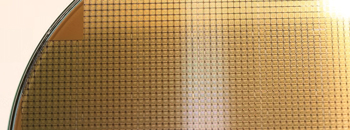 Standard programmable lines typically offer one-, two- or five-nanosecond increments. A customer needing, for example, a 6.3-nanosecond step is not forced into one of those standard values; DDD can program the device for 6.3 nanoseconds instead. Across the range, step sizes run from 50 picoseconds to 20 nanoseconds and some variants place four delay lines on a single chip.
The value lies in meeting specialized timing requirements through an existing programmable platform, supporting faster turnaround without the need for ground-up device development.
Every requirement goes through engineering first. The team evaluates the complexity of the specification and the order of magnitude involved. If a standard product meets the need, the path is straightforward. If not, DDD determines whether an existing programmable device can be configured to deliver the required performance. More complex requirements may call for a two-chip or three-chip solution or an assembled module built around DDD devices and other components.
Fixed tapped delay lines extend the portfolio by producing multiple outputs shifted progressively in time, with increments ranging from sub-nanosecond steps to 700 nanoseconds. Programmable pulse generators push timing further, with eight-bit, 12-bit and 22-bit product lines extending into the millisecond range.
Across all families, the engineering logic remains consistent; begin with the simplest device that can meet the requirement, program or modify where possible and add customization only when the application demands it.
Reliability by Design, Qualification by Requirement
Precision only matters if it holds up under the conditions the application requires.
DDD begins with a conservative design. Engineers work within the rules of a semiconductor process without pushing them to their limits, while accounting for wafer-to-wafer and die-to-die variation.
“We look at the design rules for a particular process, and we don’t push them to the limit. We overdesign in that respect,” says Dr. Lupi.
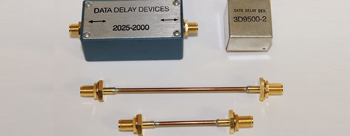 Qualification comes next and the level depends on what the customer needs the part to withstand. Dedicated outside laboratories perform environmental and reliability testing. Life testing and thermal cycling are part of that work, alongside other checks such as autoclave, solvent resistance, terminal strength, lead integrity and solderability. Group A, B, C and D testing can be added when required.
Functional testing and production control add another layer. DDD operates an automated computerized system that tests finished products and records data before shipment. Its quality-control system aligns with MIL-45208, sampling with MIL-STD-105 and calibration with MIL-STD-45662A. Each shipment is certified against the applicable specification or customer-generated control document. The Clifton facility can produce 50,000 to 100,000 units per week, with additional capacity available.
DDD is careful not to default to describing every product as a mission-specific, high-reliability device.
“We just have a conservative design and when a customer is interested in a particular level of reliability, we will test the parts to that reliability spec,” says Dr. Lupi.
One Timing Function, Many Critical Applications
DDD’s products perform narrowly defined timing functions, but the systems that depend on them span medical imaging, defense electronics and industrial automation.
Devices support CAT scan machines, PET systems, ultrasound equipment, X-ray applications, several ongoing defense contracts with Boeing and RTX Raytheon, as well as radar systems and other military electronics. Industrial applications extend into mining equipment.
-
Continuity is the most important factor for our customers, followed closely by fast turnaround. They don’t want critical components discontinued and when they need a solution, they want us to respond quickly.
In each application, the common thread is the timing requirement.
“Our products are generic products,” says Kuper. “They provide timing for whatever system requires them.”
That broad applicability is opening new directions. DDD’s clock-embedding devices support single-wire data transmission by combining clock and data into a single signal, which Honeywell uses in advanced fire alarm systems. Programmable pulse generators are also finding growing use in laser control, including applications where communication is carried via laser.
It was that adaptability that put DDD onto an ITT Aerospace satellite project. Engineers worked with the company to develop a lightweight custom component based on a set of specifications, without visibility into the specific subsystem.
“They just gave us specs and we provided the part,” says Dr. Lupi.
Carrying Continuity Forward
DDD’s ability to support products across long lifecycles is reinforced by another form of continuity—the people behind them.
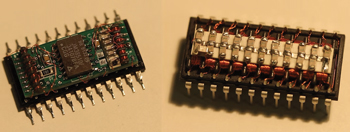 Dr. Lupi has spent 34 years with the company, while members of the assembly team have tenures approaching 38 and 40 years. Many have watched DDD’s products evolve from large timing devices to compact monolithic chips. The accumulated experience matters when customers return to products developed years earlier. Specifications preserve what a device must do. Long-tenured engineering and production teams preserve knowledge of how those products and processes evolved.
DDD is carrying that experience into its next generation of products. A long history of custom requests has created an extensive catalog of engineering multi-chip solutions. It is now evaluating whether recurring multi-chip configurations can be integrated into single-chip products and whether passive delay technology, currently delivered as assembled modules, can be brought into monolithic form.
Greater integration offers clear advantages, but DDD approaches it cautiously.
“You’ve got to walk a fine line,” says Kuper. “You want to be as generic as possible to reach as many potential customers as possible.”
That balance points to where it goes next. New semiconductor processes will replace older ones and timing requirements will emerge in systems that cannot yet be predicted. Data Delay Devices’ role is to keep the underlying timing function precise, adaptable and supportable as those systems change.
For a company built around controlling when a signal arrives, longevity has become another measure of precision.
| Share this Article:Tweet
|
Company
Data Delay Devices
Management
Dr. Victor D Lupi, PhD, VP of Engineering
Description
Data Delay Devices (DDD) develops precision timing products that combine accurate signal control with long-term product continuity. Serving medical imaging, defense, industrial and other demanding applications, DDD supports customers through programmable and custom timing solutions, proactive obsolescence planning, conservative design and engineering expertise built over more than six decades.
This content is copyright protected
However, if you would like to share the information in this article, you may use the link below: