


Thank you for Subscribing to Semiconductor Review Weekly Brief
× 
Semi Conductor Review Weekly Brief
Be first to read the latest tech news, Industry Leader's Insights, and CIO interviews of medium and large enterprises exclusively from Semi Conductor Review
Toyoshima Green Tech has been recognized by Semiconductor Review Magazine as the exclusive recipient of “Top Electronics ITAD Services 2026,” based on our proprietary methodology, reflecting its position in the industry, and is also named among “,” reflecting its broader leadership. This profile has been developed by the Semiconductor Review research and editorial team based on insights from an interview with Dan Wang, President.


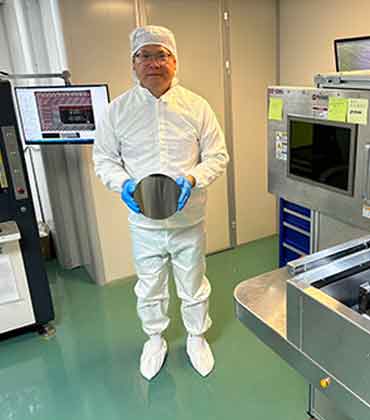 Dan Wang, President
Toyoshima Green Tech is an R2-certified electronics recycler that combines AI-powered robotic disassembly with semiconductor refurbishment to work at the component level. Its model makes component-level processing economically viable in the U.S. while creating pathways to reuse semiconductors and reclaim rare metals.
“We put refurbished components back into the market to help reduce the gap between supply and demand,” says Dan Wang, president.
Wang brings semiconductor expertise rooted in his family’s chip manufacturing background in Taiwan. This gives Toyoshima Green Tech the technical foundation to refurbish chips that conventional electronics recyclers typically leave within discarded equipment.
Making Domestic Disassembly Work
Labor-intensive disassembly can be difficult to make economical in the U.S. when the cost of manually recovering a chip exceeds its value. Toyoshima Green Tech’s use of robotic disassembly makes this work economically viable domestically, allowing the company to pursue component-level processing without relying on the lower labor costs of overseas manual disassembly.
The process begins by separating devices into their component materials. Toyoshima Green Tech removes printed circuit boards (PCB), copper, aluminum and plastics, preparing those materials for reuse or further processing. From the boards, it can harvest semiconductors and recover metals with additional value.
This component-level approach distinguishes Toyoshima Green Tech from traditional recyclers that typically refurbish whole devices such as laptops, servers and personal computers. Instead of treating the device as the end unit of recovery, the company works at the component level, refurbishing parts like RAM, flash, NAND and CPUs for reuse.
Toyoshima Green Tech has applied its capability to repair and refurbishment work for major technology companies. Customers can send failed or obsolete equipment for component recovery, while manufacturers can use refurbished parts to repair machines when new components are costly or unavailable. Refurbished RAM and flash, for example, can be supplied at roughly 30 percent of the price of new components, giving manufacturers access to working parts at a substantially lower cost.
-
We put refurbished components back into the market to help reduce the gap between supply and demand.
Toyoshima Green Tech has applied its capability to repair and refurbishment work for major technology companies. Customers can send failed or obsolete equipment for component recovery, while manufacturers can use refurbished parts to repair machines when new components are costly or unavailable. Refurbished RAM and flash, for example, can be supplied at roughly 30 percent of the price of new components, giving manufacturers access to working parts at a substantially lower cost.
From Recovery to Refurbishment
Toyoshima Green Tech refurbishes chips for applications ranging from equipment repair to new products and works on components, including AI chips. It also repairs laptop motherboards for OEM customers.
For asset owners, component-level recovery can recover value from equipment that would otherwise be written off or sold as scrap. A failed laptop, for instance, may no longer be worth repairing as a complete machine while still retaining value in components that can be recovered. Toyoshima Green Tech can extract that component value, giving the owner another source of recovery from the asset.
Toyoshima Green Tech extends recovery beyond semiconductors after valuable components have been removed. Copper, aluminum and plastics can be reused, while metals separated from PCBs can move to smelters for further processing. The company is also working with Texas A&M University on rare-metal refining, supporting its efforts to recover resources from electronics within the U.S.
It is currently preparing for a market where advanced AI chips may require more localized repair and refurbishment, particularly as cross-border restrictions affect access to certain components. Toyoshima Green Tech’s existing semiconductor refurbishment capabilities give it a foundation for pursuing more of this work in the U.S.
Its recognition as the Top Electronics ITAD Services 2026 reflects the specialized component-level approach Toyoshima Green Tech brings to electronics ITAD.
When ITAD Economics Move Below the Device Level
Retiring electronics has become harder to treat as a simple recycling decision. Boards and chips can retain component value long after a device is written off, while recoverable metals add another layer of residual value. For electronics owners, the buying decision now turns on whether an ITAD provider can recover usable components without allowing processing costs to exceed the value recovered. That makes disassembly economics and downstream recovery depth more important than basic collection alone.
Process design matters because labor can erase the economics of component-level recovery. Manual disassembly may be workable where wages are low, but the same approach can become uneconomic in the United States when extracting a chip costs more than the chip is worth. Buyers should examine how a provider separates devices, what can be removed intact and whether the process is repeatable at volume. Automation is relevant only when it improves unit economics. A provider that can efficiently isolate boards and recyclable materials gives asset owners a better chance of recovering value that would otherwise disappear into bulk scrap.
Recovery depth is equally important. Whole-device refurbishment and semiconductor recovery solve different problems. An ITAD provider focused only on resale may miss value in failed or obsolete equipment whose boards still contain serviceable memory or flash components. Component harvesting can support repair inventories, provide lower-cost replacement parts and increase the return from assets that have already reached the end of their accounting life. Buyers should look closely at testing discipline because harvested components have little practical value unless their remaining life and function can be assessed credibly.
Material recovery creates another decision point. Printed circuit boards contain recoverable metals beyond the components that can be reused directly. Providers that can separate reusable materials before boards move to smelting or refining can improve the economics of disposition while reducing dependence on disposal. The practical distinction is between a process that treats retired electronics as undifferentiated scrap and one that routes usable chips and recoverable metals into separate recovery paths. Documentation around those paths should be clear enough for procurement and sustainability teams to understand where value is created.
“Its process separates reusable metals and plastics before circuit boards move into further chip and metal recovery, preserving distinct recovery paths rather than collapsing retired electronics into bulk scrap.”
Commercial onboarding also deserves scrutiny. Asset owners benefit when providers can evaluate sample lots before large volumes are committed, estimate labor cost against expected recovery and explain how recovered parts will be tested or reused. This reduces the risk of sending material into a process whose economics are not understood in advance. The strongest engagements begin with a realistic assessment of what the equipment contains and what can be recovered at an acceptable cost.
Toyoshima Green Tech uses robotic disassembly to separate electronic devices and then applies semiconductor refurbishment to recover usable chips from retired equipment. Its process separates reusable metals and plastics before circuit boards move into further chip and metal recovery, preserving distinct recovery paths rather than collapsing retired electronics into bulk scrap. Sample material is evaluated before larger volumes are committed, allowing labor cost and expected recovery to be compared in advance. Refurbished components are also tested before wider use. This approach addresses whether component-level recovery can be performed economically and whether recovered parts can return to useful service. For organizations handling electronics rich in semiconductor value, Toyoshima Green Tech merits consideration, where deeper recovery matters more than conventional whole-device resale.
...Read more
Electronics ITAD Services Info
Q1
What Do Electronics ITAD Services Include?
Electronics ITAD Services cover the recovery, reuse, refurbishment and responsible processing of retired electronic equipment. The work can include asset assessment, component harvesting, circuit board separation and material recovery. Rather than treating every obsolete device as scrap, these services identify parts that may retain practical or commercial value. Electronics recycling can recover copper, aluminum and plastics, while semiconductor refurbishment can return usable chips to service. The scope of recovery depends on equipment condition, component demand and processing costs. A suitable approach considers both the value of recovered parts and the materials that require further recycling.
Q2
How Does Toyoshima Green Tech Recover Value From Obsolete Electronics?
Electronics ITAD Services can preserve value that whole-device recycling may overlook. Toyoshima Green Tech uses AI-powered robotic disassembly to separate obsolete electronics into components and materials. Its process recovers printed circuit boards, copper, aluminum and plastics before further component and metal recovery. The company also refurbishes semiconductors, including RAM, flash and NAND components, as well as CPUs. This component-level approach gives equipment owners another option when a complete device no longer works or costs too much to repair. It also creates opportunities to return recovered components to repair and replacement supply chains.
Q3
How Can Component Recovery Reduce Electronics Disposal Costs?
Electronics ITAD Services can help organizations recover value from equipment that would otherwise be written off or sold as scrap. A failed laptop or obsolete server may contain working memory, processors or other reusable parts even when the complete device has little resale value. Recovering these components can provide replacement inventory and reduce dependence on newly manufactured parts. However, the economics depend on the cost of disassembly, component condition, testing requirements and market demand. Electronics recycling can also recover metals and plastics after reusable components have been removed, creating additional recovery routes instead of sending all materials through one disposal process.
Q4
What Should Organizations Look for When Choosing an ITAD Provider?
Electronics ITAD Services should help providers identify reusable components, control processing costs and sort materials for recovery. Buyers should ask how providers check equipment, test recovered parts and decide which materials they can reuse. Clear records should show where components and recyclable materials go after disassembly. Providers should also assess whether automation lowers costs at the required production volume. These factors help organizations compare component recovery with whole-device resale and standard electronics recycling. Not every retired device contains parts that justify the cost of recovery.
Q5
How Does Semiconductor Refurbishment Support Equipment Repair?
Electronics ITAD Services can support repairs by returning usable components to circulation. Semiconductor refurbishment can help when replacement chips cost too much or are hard to find. Refurbished memory and flash components may cost less than new parts. Recovered processors and other chips can also support repairs when they meet the equipment's needs. Testing is essential to confirm that each component works as intended. Separating reusable parts from discarded equipment also gives repair teams more replacement options. However, the condition of each component and its compatibility with the equipment determine whether it can be reused.
Q6
How Does Toyoshima Green Tech Recover Materials Beyond Semiconductor Components?
Electronics ITAD Services can recover materials as well as refurbish chips. Toyoshima Green Tech also works to recover rare metals from electronic waste and collaborates with Texas A&M University on rare-metal refining. Its process separates materials such as copper, aluminum and plastics, while circuit boards can undergo further metal recovery. The company also repairs laptop motherboards for original equipment manufacturer customers and refurbishes chips for equipment repair and other uses. These activities show how electronics recovery can serve two purposes: returning working components to use and processing materials that need further treatment.
| Share this Article:Tweet
|
Company
Toyoshima Green Tech
Management
Dan Wang, President
Description
Toyoshima Green Tech is an electronics recovery and ITAD company that uses AI-powered robotics to disassemble obsolete equipment and recover semiconductor components. Its capabilities span chip refurbishment, component repair, material recovery and rare-metal recovery, helping preserve value beyond whole-device recycling.
This content is copyright protected
However, if you would like to share the information in this article, you may use the link below: